
One knocked glass at dinner can turn a clean carpet or lounge into the first thing everyone notices. If you need to get red wine stains out, speed matters, but so does using the right method. The wrong product or too much scrubbing can push the stain deeper, spread the colour, or damage the fibres.
Red wine is difficult because it contains strong pigments, tannins and natural acids. That combination lets it bond quickly to soft surfaces, especially light-coloured carpet, rugs and upholstered furniture. The good news is that a fresh spill is often treatable at home if you act quickly and keep the process gentle.
How to get red wine stains out without making them worse
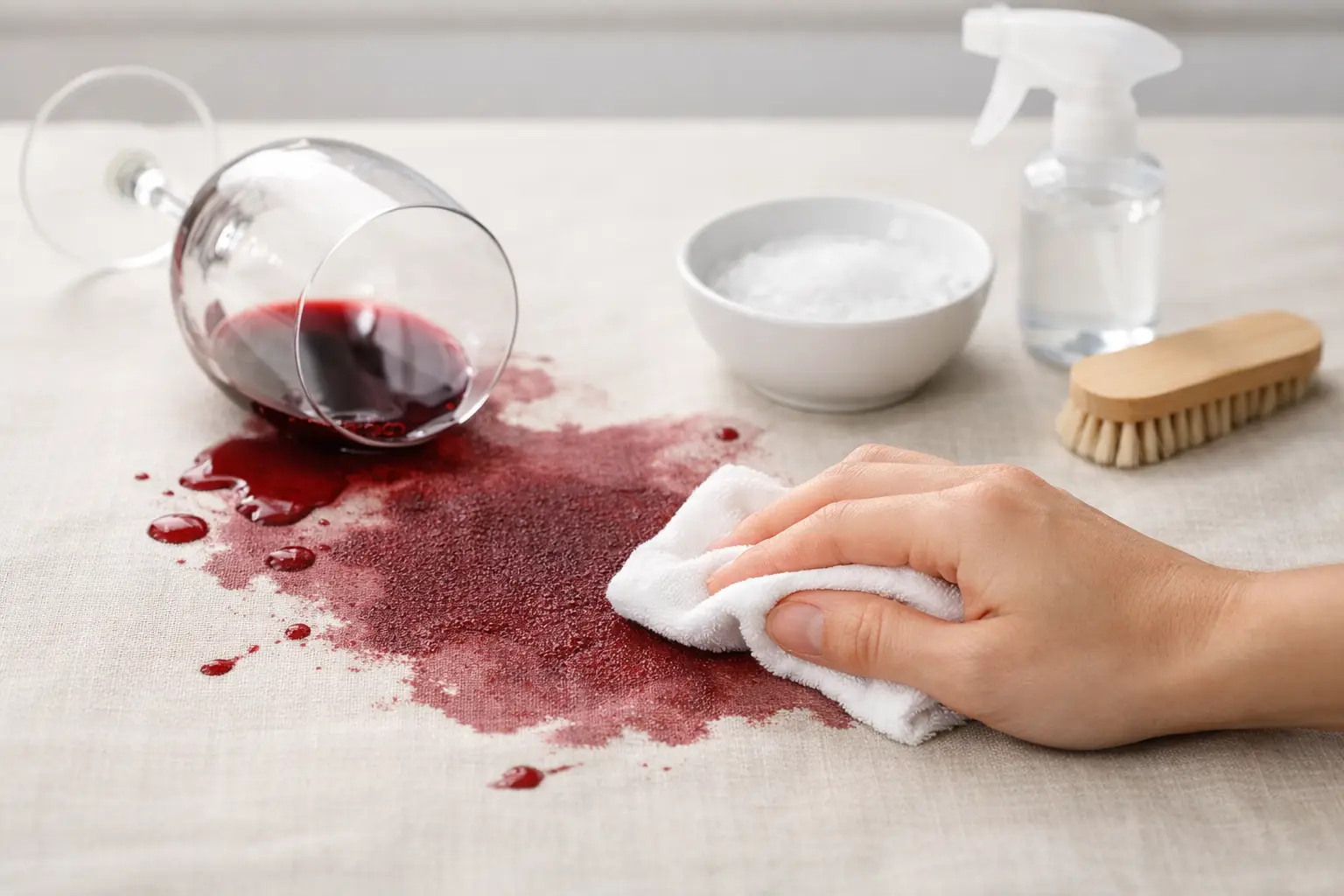
The first few minutes make the biggest difference. Start by blotting the area with a clean white cloth or paper towel. Press down firmly to lift as much liquid as possible, but do not rub. Rubbing spreads the stain and can force it deeper into the backing or padding.
Once you have removed the excess wine, use cold water to lightly dampen the stained area. This helps dilute the remaining pigment. Blot again with a fresh part of the cloth. You may need to repeat this several times. The aim is to lift the wine out in stages rather than soak the area all at once.
If the stain remains, mix a small amount of mild dishwashing liquid with cold water and test it on an inconspicuous spot first. If the fabric or carpet reacts well, apply a little of the solution to the stain using a clean cloth. Blot carefully from the outside in. Working from the edge towards the centre helps stop the stain from spreading.
After that, blot with plain cold water to remove any detergent residue. Leaving soap behind can attract dirt later, which means the spot may look clean at first and then turn into a darker patch over time.
What not to do when trying to get red wine stains out
A lot of stain damage happens during the clean-up, not during the spill itself. Hot water is one of the most common mistakes. Heat can help set parts of the stain, particularly on natural fibres. Stick with cold water unless a manufacturer care label says otherwise.
Scrubbing is another problem. It can rough up carpet fibres, distort upholstery fabric and spread the pigment wider than the original spill. Even if it looks like you are attacking the problem, aggressive cleaning often makes professional stain removal harder later.
Be careful with supermarket stain removers too. Some work well on some fibres, while others can bleach colour, leave residue or react badly with wool and delicate upholstery. If you are cleaning a wool carpet, a Persian-style rug, linen upholstery or any surface with a specialty finish, it is worth slowing down and avoiding anything harsh.
There is also a lot of advice online about salt, baking soda and white wine. Some of these tricks can help in certain situations, but they are not foolproof. Salt may absorb some liquid from a fresh spill, but it can also leave a messy residue that needs extra cleaning. Baking soda can be useful as part of a treatment, though it is not a guaranteed fix on its own. Pouring white wine onto red wine is more of a party story than a dependable cleaning method.
Carpet, rug or couch – the surface changes the approach
Carpet usually responds best to blotting, dilution and a mild cleaning solution, especially if the spill is fresh. The challenge is that wine can sink below the visible fibres into the underlay. When that happens, the top may look better while odour or staining remains underneath.
Rugs need a bit more care because fibres and dyes vary so much. Wool rugs can be sensitive to over-wetting and strong chemicals. Some decorative rugs are also prone to dye bleed, where the colours run during cleaning. If you are unsure what the rug is made from, the safest move is to blot only and avoid experimenting.
Upholstery can be trickier than carpet because fabric is often thinner and the filling underneath absorbs liquid fast. If red wine reaches the cushion insert, surface cleaning may not be enough. You might reduce the visible mark while moisture and odour remain inside. That is one reason lounge stains can seem to return after drying.
When home methods are enough, and when they are not
If the spill is fresh, the surface is colourfast, and you catch it early, home treatment has a fair chance of reducing or removing the stain. That is especially true for small spills on synthetic carpet or durable upholstery.
It becomes more complicated when the wine has dried, when someone has already scrubbed it, or when multiple products have been used. Old red wine stains often need more than one pass because the pigment has had time to settle into the fibres. The same goes for larger spills that soaked through to the backing or padding.
Professional cleaning is usually the smarter option if the stained item is expensive, delicate, or part of an end-of-lease clean where presentation matters. It is also worth getting help if the stain is on a cream carpet, a wool rug, dining chairs, or a fabric couch that gets daily use. In those cases, the cost of trial-and-error can be higher than the cost of a proper clean.
Why some red wine stains come back after they seem gone
A stain can appear to disappear while the area is wet, then show up again after drying. This is often caused by wicking. Moisture trapped below the surface rises back up as it dries, bringing dissolved pigment with it. It is common in carpet and upholstered furniture where the spill reached deeper layers.
Residue is another issue. If too much detergent is used and not fully rinsed out, the cleaned spot can attract dust and look dirty again. That does not always mean the wine came back. It may mean the area was over-treated.
This is where professional extraction can make a real difference. Instead of just treating the visible fibres, extraction equipment helps remove staining agents, moisture and residues from deeper in the material. For households with children, pets or frequent entertaining, that deeper clean can save a lot of frustration.
How professionals get red wine stains out more effectively
A proper stain treatment is not just one spray and a quick rinse. The process depends on the fibre type, dye stability, age of the stain and whether anything has already been applied. A technician will usually identify the material first, then choose a treatment that suits both the stain and the surface.
For carpet and upholstery, this often involves targeted stain treatment followed by hot water extraction or another suitable cleaning method. Although heat can set a stain in some DIY situations, professional systems are controlled and matched to the material. The benefit is stronger removal power without the guesswork that comes with off-the-shelf products.
Eco-friendly products also matter, especially in family homes. Many people want stains removed without leaving harsh chemical residues behind on the floor where kids play or on the lounge where everyone sits each night. That balance between results and safety is a big part of why people call a professional service.
In homes across Melbourne’s western suburbs, we see red wine spills most often on light carpet, dining room chairs and fabric sofas. The pattern is usually the same: a quick attempt with paper towel, then a few home remedies, then concern when the mark is still there the next morning. In those cases, acting sooner rather than later gives the best chance of full removal.
A few practical tips for the next spill
Keep a couple of clean white cloths handy in the cupboard so you are not searching through the linen press while the stain spreads. Treat the spill straight away, use cold water sparingly, and avoid coloured towels that may transfer dye. If the item is delicate or the stain is large, stop after blotting and arrange professional help before the spot has time to set.
If you are ever unsure, the safest rule is simple: remove what you can, do not scrub, and do not throw every product in the cupboard at it. Red wine stains can be stubborn, but they are often still fixable when the response is calm and the method is right.
Sometimes the best result comes from knowing when to stop. A fast, careful first response can make all the difference, and if the stain needs more than that, a professional clean can restore the surface properly without adding new damage.


tadalafil reddit mylan tadalafil tadalafil pulmonary hypertension
does cialis keep you hard after coming when to take cialis for best results how long does cialis take to work
tadalafil from india liquid tadalafil dosage tadalafil citrate liquid