

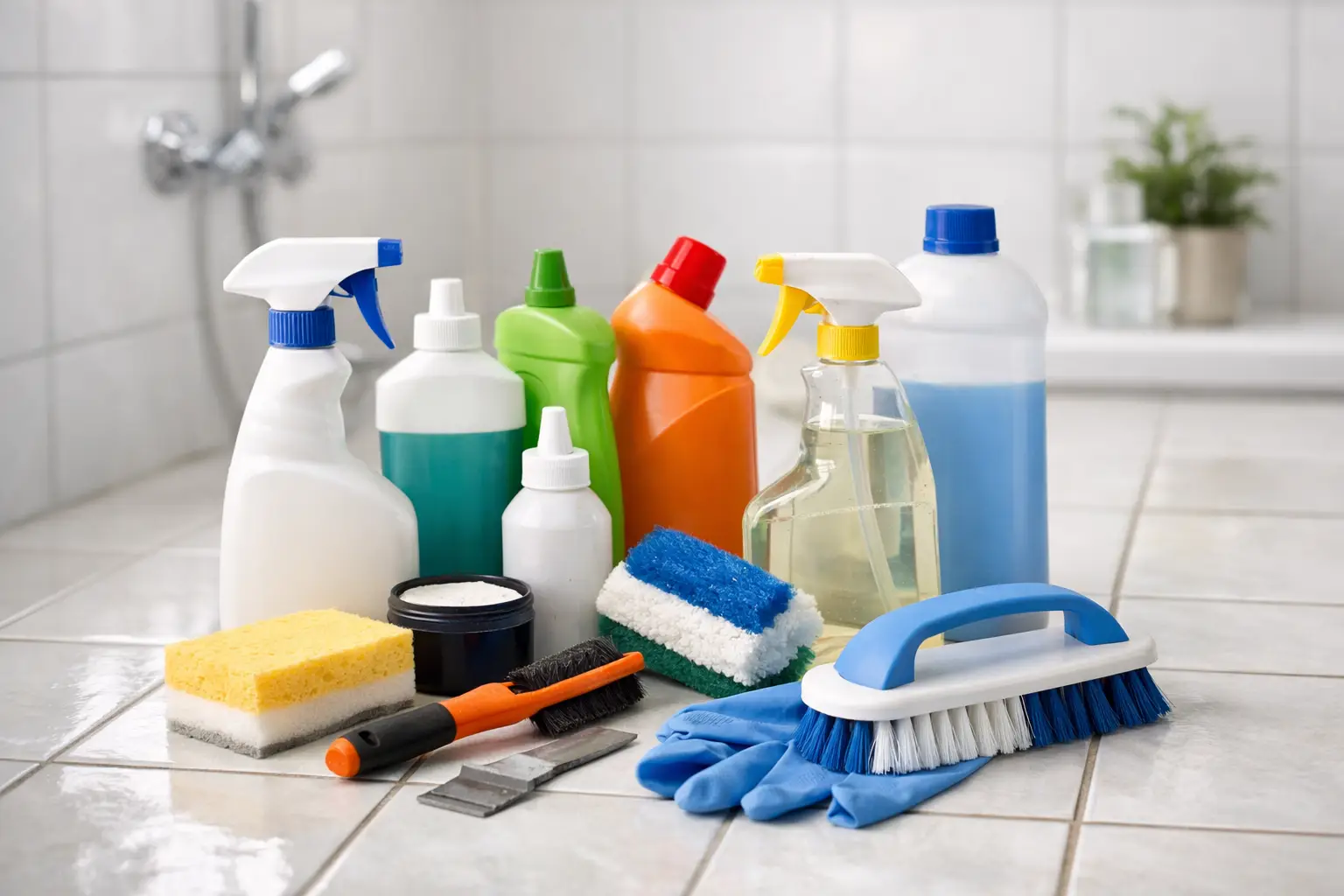
Grout rarely looks dirty all at once. It fades gradually, picks up soap scum near the shower, darkens around the kitchen splashback, and starts making otherwise clean tiles look tired. That is why people go searching for the best grout cleaning products – not because the tiles are the problem, but because the grout lines make the whole room look older and less hygienic than it is.
The tricky part is that grout does not respond the same way in every home. Bathroom grout with mould needs a different approach from greasy kitchen grout, and older porous grout can react badly to strong chemicals. If you choose the wrong product, you can waste time, damage sealant, or lighten the grout unevenly. A better approach is to match the product to the problem.
How to choose the best grout cleaning products
Before buying anything, it helps to identify what is actually sitting in the grout. In many homes, the issue is a mix of body oils, soap residue, dust and moisture. In kitchens, cooking grease is often the main culprit. In laundries and damp bathrooms, mildew and mould are more common.
That matters because some products are designed to break down grease, while others are made to lift mineral build-up or kill mould spores. Stronger is not always better. On sealed grout, many cleaners will perform well. On older or unsealed grout, harsh acidic or bleach-heavy products can create patchy results and shorten the life of the grout itself.
If you have pets, young children, or poor ventilation indoors, the product’s fumes and residue matter as much as the stain-lifting power. For many households, low-odour and eco-friendlier options are worth considering first, especially for routine cleaning.
10 best grout cleaning products for common jobs
1. Oxygen bleach grout cleaners
For general bathroom and floor grout cleaning, oxygen bleach products are often one of the safest places to start. They are usually less aggressive than chlorine bleach but still effective on built-up grime, organic staining and some mould discolouration.
They work best when given dwell time rather than being scrubbed immediately. If the grout is moderately dirty rather than heavily blackened, this type of cleaner can freshen the lines without the overpowering smell many people want to avoid.
2. Alkaline tile and grout cleaners
When grease, body oils and soap scum are the main issue, alkaline cleaners are often more useful than bleach. They break down oily residue well, which makes them a practical option for kitchen tiles, shower floors and high-traffic areas.
This is one of the best grout cleaning products categories for people who have tried mould sprays with poor results, only to discover the real problem is greasy build-up trapping dirt. They usually need agitation with a grout brush, but they can make a big difference when the staining is surface-based.
3. pH-neutral everyday grout sprays
If your grout is not badly stained and you simply want to stop it getting worse, a pH-neutral maintenance spray is a smart buy. These products are designed for regular use and are less likely to strip sealers or leave harsh residue.
They are not miracle workers on deep stains, but they are useful for preserving results after a proper clean. For families trying to stay on top of bathroom hygiene week by week, this is often more realistic than relying on a heavy-duty cleaner every month.
4. Mould and mildew grout sprays
These are the products many people reach for first in bathrooms, and sometimes that makes sense. If the grout has black spotting or pink staining caused by moisture and bacteria, a mould-specific spray can help lift the discolouration and sanitise the area.
The trade-off is that some formulas are quite harsh. Good ventilation matters, and it is worth spot testing first. They are most effective on biological staining, but less useful on old embedded dirt.
5. Gel-based grout cleaners
Gel cleaners are especially handy on wall tiles and vertical grout lines because they cling better than liquid sprays. That gives the active ingredients more time to work instead of running straight down the tile.
In showers, around bath surrounds and behind basins, gel products can reduce the amount of scrubbing needed. They are not always the fastest option, but for awkward bathroom areas they are often more practical than thinner cleaners.
6. Grout whitening pens and touch-up products
These are not true deep-cleaning products, but they do have a place. If the grout is permanently discoloured or stained beyond recovery, a whitening pen or grout colourant can improve appearance without regrouting the whole area.
That said, this is more of a cosmetic fix than a clean. It works best after the grout has been thoroughly cleaned and dried. If mould or moisture issues are still present underneath, the fresh look usually does not last.
7. Enzyme-based cleaners
Enzyme cleaners are a good option when organic matter is contributing to staining or odour. They are commonly used around pet accidents, bathroom mess, and areas where lingering residue keeps attracting dirt.
They are generally gentler than some chemical-heavy alternatives, though they can work more slowly. For households that prefer a lower-tox approach, they are often worth trying on lightly to moderately soiled grout.
8. Foaming grout cleaners
Foaming products can be useful because they stay visible during application, which helps on larger tiled areas. Many are designed for bathroom use and target soap scum and daily grime rather than deep restoration.
They are convenient, but convenience is not always the same as power. If your grout is deeply stained, foam alone may not be enough. It can still be a practical maintenance product between more thorough cleans.
9. Steam-compatible grout cleaning solutions
Some cleaners are designed to be used alongside steam cleaning or hot extraction methods. These can loosen grime before agitation and rinsing, making them more effective than simple wipe-on sprays.
For households dealing with years of built-up grime, this approach can outperform supermarket products used on their own. It is also one reason professional tile and grout cleaning gets stronger results – the product matters, but so does the equipment and rinse process.
10. Eco-friendly biodegradable grout cleaners
For many Australian households, especially those with children and pets, eco-friendly biodegradable products are high on the list. The good ones can be effective on everyday grime without leaving a harsh chemical smell behind.
The main thing to keep in mind is expectation. Some greener products are excellent for maintenance and moderate soil, but may struggle with severe mould staining or years of embedded dirt. They suit regular care best, or homes where safety and lower residue are the top priorities.
What to avoid when using grout cleaners
A lot of grout damage happens because people mix products or use them too aggressively. Combining bleach with other cleaners is unsafe, and using highly acidic products on cement-based grout can weaken it over time. Wire brushes are another common mistake. They can rough up the surface and make the grout hold more dirt later.
It also helps to avoid soaking grout for too long, especially in older bathrooms. Excess moisture can seep into weak areas and feed the very mould problem you are trying to fix. A controlled application, decent dwell time and proper rinse usually work better than flooding the area.
When the best grout cleaning products are not enough
There is a point where product choice is no longer the main issue. If grout has not been cleaned properly for years, if the stains are deep below the surface, or if the area has been repeatedly exposed to moisture, DIY cleaners may only improve it slightly.
This is common in rental properties, family bathrooms, and tiled areas near entrances where dirt gets walked in every day. You scrub, the grout lightens a bit, and within a week it still looks dull. That usually means the grime is embedded, the grout is porous, or the sealer has worn away.
Professional cleaning can help in those cases because the process is not just about applying a stronger product. It usually involves targeted pre-treatment, agitation, hot water extraction or steam cleaning, and proper removal of loosened soil. That last step matters. If the grime is not thoroughly extracted, it can settle back into the grout quickly.
In homes across Melbourne’s western suburbs, we often see customers spend money on several off-the-shelf cleaners before deciding they want a proper reset. That does not mean DIY products are useless. It simply means they work best within their limits.
A practical way to get better results
If you are trying grout cleaning at home, start with the mildest product likely to suit the problem. Use a small test area first, allow enough dwell time, scrub with a proper grout brush, and rinse thoroughly. If the improvement is only minor after two careful attempts, changing technique or calling in professional help usually makes more sense than moving straight to harsher chemicals.
The best grout cleaning products are the ones that suit your grout type, your level of staining, and the people living in the home. A family bathroom, a pet area, and a commercial kitchenette all call for slightly different decisions. Clean grout should look better, last longer, and feel safer underfoot – not come at the cost of damaged surfaces or heavy chemical residue.
If your tiles still look tired after a fair effort, that is not a sign you have failed. It is usually a sign the grout needs a deeper clean than a bottle alone can deliver.


Start your winning journey with a official https://docs.google.com/forms/d/1M4NTMikARvdfMK7A2-iLIIwYLskGo3opU1es3kLTm3E/edit. Boost your first deposit and take advantage of the platform’s special promotions for new players.