
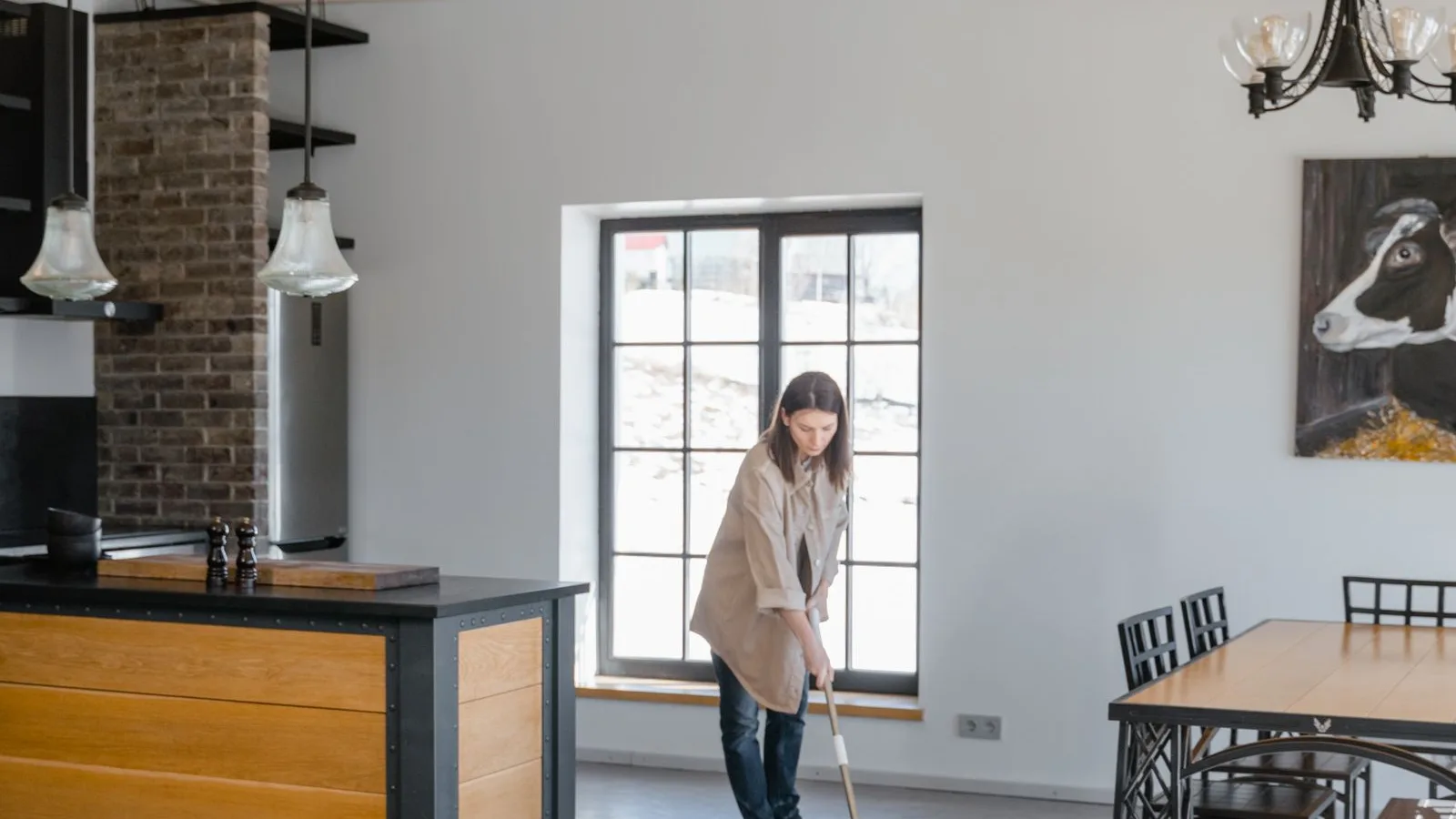
In the trade, "hard floors" is a loose label for timber, vinyl, laminate, stone and tile. (Our own hard floor service is the wood side of that list. Tile and grout is a separate service with its own price.) The method that suits one of them can damage another, and that is what trips people up. Using the wrong approach is how floors end up dull, streaky or warped. Let's compare the main hard floor cleaning methods and where each one belongs.
Why the surface matters so much
Every hard floor has a different tolerance for moisture, abrasion and chemicals. Timber hates water; tile handles it easily. Vinyl scratches; stone can be etched by acid. Matching the method to the material is what protects your floor. This is the core of professional hard floor cleaning: identifying the surface first, then choosing the safe, effective method.
Method 1: Damp mopping
Best for: sealed timber, laminate, vinyl.
The everyday method, and the safest for moisture-sensitive floors when done properly. The key is damp, not wet. A well-wrung microfibre mop lifts dirt without soaking the surface. Use a cleaner suited to the floor type and dry as you go.
Avoid: over-wetting timber and laminate. Standing water seeps into seams and causes swelling and warping.
Method 2: Mopping with water and detergent
Best for: sealed tile and ceramic floors.
Tile handles water well, so a more generous mop with a suitable floor detergent works fine. Rinse afterwards to avoid leaving a residue that dulls the surface and attracts dirt.
Avoid: using this on timber or unsealed stone.
Method 3: High-pressure cleaning
Best for: tile and grout.
For tiled floors, especially where the grout is grimy, high-pressure cleaning is in a class of its own. It flushes dirt out of porous grout lines that mopping can never reach. This is what we use for tile and grout restoration, often followed by sealing to keep the grout cleaner for longer.
Avoid: high pressure on timber, laminate or delicate surfaces.
Method 4: Steam cleaning
Best for: tile and some sealed hard surfaces, with caution.
Steam uses heat rather than harsh chemicals and is excellent for carpet, but on hard floors it needs care. It can be effective on tile, but forcing steam into timber or laminate drives moisture into the material and can damage it. When in doubt, steam is safest kept for carpets and upholstery.
Avoid: steam mops on timber and laminate.
Method 5: Machine buffing and polishing
Best for: stone, sealed concrete, and some vinyl.
For certain hard floors, machine buffing restores shine and removes fine scratches. It's specialist work matched to the specific surface and finish.
A quick reference
- Timber / hardwood: damp microfibre mop, controlled moisture, no steam, no flooding.
- Laminate: barely-damp mop, dry quickly, no steam.
- Vinyl: damp mop with mild cleaner, avoid abrasives and harsh solvents.
- Tile: mop freely, high-pressure clean for grimy grout. Sealing is a paid extra we will do on request, but it is not something we push: sealer sits on top of the grout and has to be stripped before it can be redone properly.
- Natural stone: pH-neutral cleaners only, no vinegar or acids, specialist care.
The most common mistakes
In my experience, the two things that damage hard floors most are too much water and the wrong product. A generic supermarket cleaner used on the wrong surface can strip a finish or leave a dulling residue that's hard to reverse. And over-wetting timber is the classic cause of warped, cupped boards.
When cleaning isn't the answer
Sometimes the honest answer is that a floor is past cleaning. Laminate that has swollen at the joins, vinyl that has lifted, tiles that are cracked or drummy, none of that comes back with a machine, and I'll tell you so rather than take the job. At that point you want a flooring supplier, not a cleaner. Locally, Sun Floors Imports in Hoppers Crossing carries laminate, vinyl and tiles and is a short drive from most of Melbourne's west. For solid or engineered timber, they're not the right stop. That needs a timber specialist.
When to bring in a professional
Regular maintenance is yours to handle. But when floors have years of built-up grime and residue, when you're not sure what your floor can safely handle, or when you want a genuinely restored, streak-free finish, professional cleaning is worth it. We match the method to your exact floor and get results without the risk of damage.
We're a family-owned team in Point Cook covering all of Melbourne's west. Not sure which method your floor needs? Call (03) 4328 5637 or get a free quote and we'll point you in the right direction.
Frequently Asked Questions
What is the safest way to clean timber floors?
A damp microfibre mop with controlled moisture. No steam and no flooding: over-wetting timber is the classic cause of warped, cupped boards.
Can you steam clean laminate floors?
No. Laminate needs a barely-damp mop and should be dried quickly, and steam should be avoided.
What cleaner should be used on natural stone?
pH-neutral cleaners only. Avoid vinegar and other acids, because natural stone needs specialist care.
What damages hard floors most?
Too much water and the wrong product. A generic supermarket cleaner used on the wrong surface can strip a finish or leave a dulling residue that is hard to reverse.