
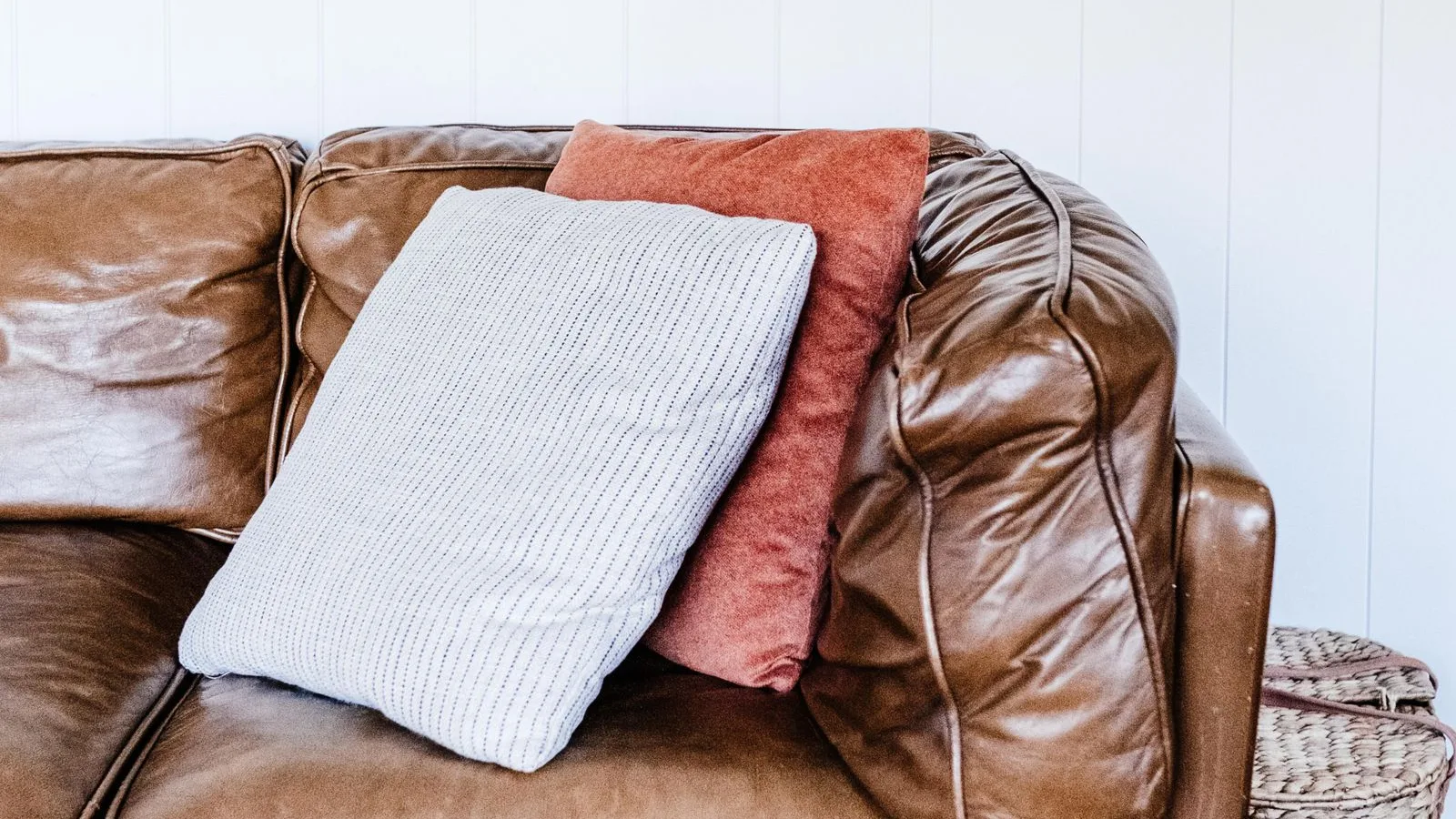
TL;DR: Before you clean a leather couch, find out what kind of leather it is: put a single drop of water on a hidden spot. If it beads on the surface, your couch is finished leather and you can clean it with a barely damp microfibre cloth and a pH-neutral leather cleaner, then condition it. If the drop soaks in and darkens the spot, it is unfinished leather. Leave it alone and get it looked at. Skip the vinegar and the dish soap either way, and remember that cleaning cannot reverse a finish that is already cracked.
Search how to clean a leather couch and you will get a very confident answer within about ten seconds: mix vinegar and water, or a squirt of dish soap in warm water, wipe it over, done.
I clean leather lounges across Point Cook and Melbourne's west, and that advice is the reason a fair few of them end up looking patchy. It is not that vinegar destroys a couch on contact. It usually looks fine the first couple of times, which is exactly why the tip keeps getting repeated. The damage is slow, and by the time it shows, it is not fixable by cleaning.
Here is what I actually do, and how you can work out which category your couch is in before you touch it with anything.
What kind of leather is your couch, really?
Almost everything else depends on this, and it takes about thirty seconds to find out.
Put one drop of water on a hidden area: the back of the couch, or under a cushion where the leather continues.
- The drop sits on top and beads. That is finished leather (also sold as pigmented or protected leather). It has a thin clear topcoat over the hide, and that coating is what you are actually cleaning. The overwhelming majority of modern lounge suites are this. It is the forgiving kind.
- The drop soaks in and leaves a dark patch that fades as it dries. That is unfinished leather: aniline or semi-aniline. It has little or no protective coat, so it absorbs everything, including your cleaner. It feels lovely and it is far less tolerant of home experiments.
If you got the second result, my honest advice is to stop at dry dusting and get someone to look at it before you use any product at all. Nearly every "I tried to clean it and now there's a mark" job I get called to is unfinished leather.
Why vinegar and dish soap are the wrong tools
Both of them work by attacking something, and on a couch the thing they attack is the finish rather than the dirt.
Vinegar is acidic. On finished leather, repeated acidic wiping gradually softens and dulls the clear topcoat that is doing all the protecting. You do not see it as damage. You see it as the couch looking a bit flat and grabbing marks more easily than it used to, six months later. On unfinished leather it can mark the hide straight away.
Dish soap is a degreaser, and that is the problem. It is designed to lift oil, and leather is kept supple by oils and plasticisers. It strips grime and it strips those at the same time. Same story with baby wipes and sanitising wipes, which usually carry alcohol, and with anything containing bleach or ammonia.
None of this needs a cupboard of specialist chemicals to avoid. It needs one cloth and restraint.
Cleaning finished leather without wrecking it
If your water drop beaded, this is a job you can genuinely do yourself.
- Vacuum first, with a soft brush head. Get into the seams and under the cushions. Grit sitting in the creases is what abrades the finish every time someone sits down, and no amount of wiping fixes it if it is still there.
- Wring the cloth out until it feels almost dry. A microfibre cloth with plain water is enough for most everyday grime. Damp, never wet: you are wiping the surface, not washing the hide.
- If you want a product, use a pH-neutral cleaner made for leather, and test it on a hidden spot first. Wipe in small sections and follow with a second, clean damp cloth.
- Dry it off with a clean cloth as you go, rather than leaving it to air dry with water sitting in the grain.
- Condition it afterwards. This is the step people skip, and it is the one that matters most. Conditioner puts back the suppleness that keeps leather from drying and cracking. Test it on a hidden spot too, apply a small amount, and buff off the excess.
Do the whole panel, not just the dirty patch. Cleaning one cushion of a three-seater is how you end up with one cushion that does not match.
What about the shiny dark patches on the arms and headrest?
That is usually body oil, not dirt, and it is the most common leather problem I get called out for. It builds up where heads and hands rest, and because it goes on gradually nobody notices until it has a sheen to it.
Plain water will not shift it, and this is exactly the moment people reach for dish soap because it is a grease problem and dish soap is a grease product. It does lift the oil. It also takes the finish's own oils with it, and on a headrest, the spot with the most contact and the most wear already, that is the worst possible place to strip.
If you have got a defined shiny patch that has been building for a while, it is worth getting someone to do it rather than experimenting on the most visible panel of the couch.
What cleaning can and cannot fix
Being straight about this saves everyone a wasted trip.
Cleaning and conditioning genuinely fixes: general grime and dulling, body oil on arms and headrests, most food and drink marks, surface scuffs, and leather that has gone stiff and thirsty. The colour depth that comes back on a dried-out couch surprises people.
Cleaning does not fix: cracking, flaking, or a finish worn through to the backing underneath. Once the topcoat has actually broken, no clean puts it back. That is re-colouring, which is a leather restoration trade rather than a cleaning one. It also does not fix scratches through the finish, or dye transfer from denim that has already soaked into unfinished leather.
I would rather tell you that on the phone than turn up, clean it, and have you looking at the same cracks afterwards. If yours is at that stage, I will say so.
When it is worth getting it done professionally
Three situations, honestly:
- Your water drop soaked in. Unfinished leather is not the place to learn.
- There is a defined shiny or discoloured patch, rather than general grime across the whole couch.
- You have already tried something and it looks worse. This is a real category and there is no need to be embarrassed about it. The sooner it is looked at, the more can be done.
We clean leather lounges as part of our couch and sofa cleaning and wider upholstery cleaning service, per seat, with the leather rate and the visit minimum listed on our full price list, the quote you get is the price you pay. Every clean is backed by our 7-day satisfaction guarantee, and if a couch is past what cleaning can achieve, I will tell you before we book it rather than after.
If the smell is the real issue rather than the marks, that is a different problem with a different fix. See how to get bad odours out of a couch.
Frequently asked questions
What is the best thing to clean a leather couch with?
For everyday cleaning on a finished leather couch, which is most modern lounges, a barely damp microfibre cloth and a pH-neutral cleaner made for leather is as good as it gets, followed by a proper conditioner. The cloth should be wrung out until it feels almost dry. Water is not the enemy; soaking is.
Can you clean a leather couch with vinegar?
I would not. Vinegar is acidic, and on the clear topcoat that most modern leather furniture is finished with, repeated acidic wiping dulls and softens that layer over time. It usually looks fine the first few times, which is why the advice keeps spreading. On unfinished aniline leather it can also mark the hide permanently.
What household products can you use to clean leather?
Honestly, very few, and none I would use on a couch I cared about. Dish soap is a degreaser and strips the finish along with the grime; baby wipes and sanitising wipes usually contain alcohol; bleach and ammonia damage leather outright. Plain water on a wrung-out microfibre cloth is the one household option that will not do harm.
How do I make my leather couch look new again?
Cleaning and conditioning restores colour depth and suppleness to leather that is dirty or dried out, and the difference is usually bigger than people expect. What it cannot do is bring back a finish that has cracked or worn through to the backing. That is a re-colouring job for a leather restoration specialist, not a clean, and I will tell you which one you are looking at before we start.
How often should a leather couch be cleaned?
Wipe the dust off every few weeks and condition it every six to twelve months, more often if the couch sits in direct sun or near a heater. A professional clean once a year is plenty for most lounges. Conditioning matters more than cleaning on leather. Most of the damage I see is from drying out, not from dirt.
Got a leather lounge you are not sure about? Send us a photo and the details and I will tell you honestly whether it is a clean or a restoration job.