
TL;DR:
- First work out whether your suede couch is genuine suede (leather) or microsuede (a polyester fabric). They are cleaned very differently.
- Read the cleaning code on the tag. W means water is fine, S means water-free cleaners only, X means vacuum and brush only.
- Water marks happen when a small damp patch dries from the outside in. Clean the whole panel and dry it fast.
- Rubbing alcohol is a common option for S-coded microsuede, but test first, apply it to a cloth and treat it as highly flammable.
- Keep genuine suede dry at home. Brush it, use an eraser on marks, and get anything wet assessed.
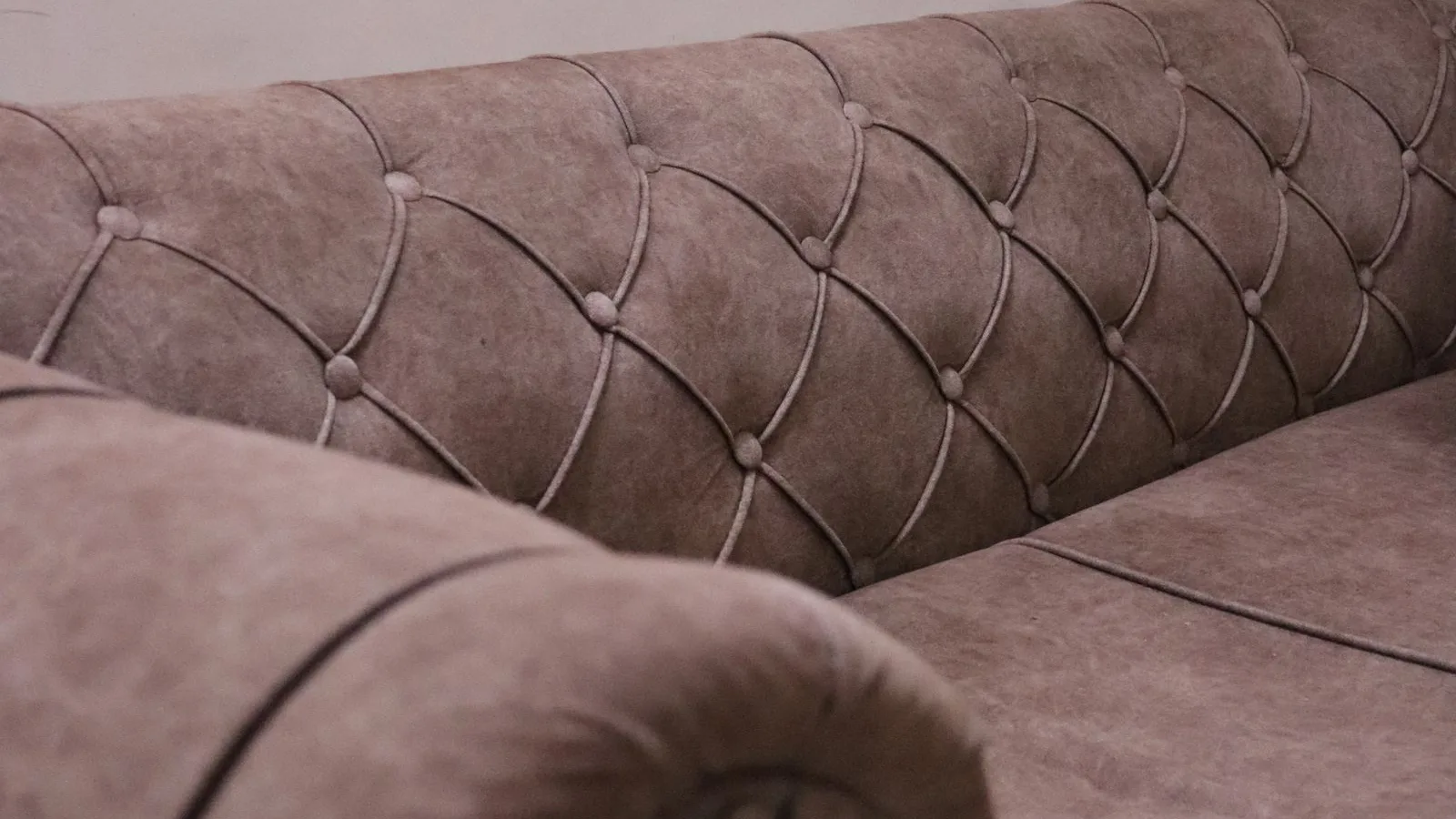
To clean a suede couch without leaving water marks, you need to know two things before you start: what the couch is actually made of, and what its cleaning tag allows. Get those wrong and a small spill turns into a ring the size of a dinner plate. Many couches sold as "suede" are really microsuede, a synthetic fabric, and the right method for it can ruin real suede.
Is your couch real suede or microsuede?
Most suede couches are microsuede, a polyester microfibre fabric with a brushed surface, and the tag or the original paperwork will usually tell you which you have. Genuine suede is leather. The Leather Research Laboratory describes it as leather with a velvet-like nap, normally made from split hide.
A few quick checks if the tag is missing:
- Look at the back or underside. Genuine suede is a hide, so panels are stitched together and the edges look like leather. Microsuede has a woven or knitted backing like any other fabric.
- Check the paperwork. Genuine suede lounge suites are expensive and fairly uncommon. If yours came from a mainstream furniture store, the receipt or product page will often say microfibre or polyester.
Still not sure? Treat it as genuine suede, which means no water.
What does the cleaning tag on a suede couch mean?
The letter on the tag tells you which liquids the fabric can take. Look under the seat cushions or along the base of the frame.
| Code | What it means | What to use at home |
|---|---|---|
| W | Water-based cleaners are fine | A damp cloth, a little mild soap if needed |
| S | Solvent cleaners only | A water-free solvent; no water, no steam |
| W/S | Either works | Start with the gentlest, then step up |
| X | Vacuum or brush only | No liquids at all |
A furniture retailer's guide spells out the S rule plainly: never apply water or steam. A lot of microsuede is coded S, and that is where most water rings come from.
Not every synthetic suede is coded S, though. One major maker says most spills on its fabric come off with a gentle dab of a cloth in lukewarm water. Read your own tag. Our guide to cleaning a fabric couch covers the codes in more depth.
How do you clean a suede couch day to day?
Vacuum it and brush it. That is most of the job, and it is the part that stops the seats of a suede couch going flat and shiny.
- Vacuum with the upholstery tool. Go over the seats, backs, arms and down the sides of the cushions where crumbs collect. The Australasian Society of Clinical Immunology and Allergy suggests vacuuming sofas weekly if anyone in the house has dust mite allergy.
- Brush the nap. A soft brush lifts flattened areas and loosens dry dirt. The synthetic suede maker above recommends lightly buffing with a medium-bristle brush.
- Rotate loose cushions so one seat does not take all the wear.
In my experience, hard scrubbing does more damage on a napped surface than almost anything else. It spreads the mark, crushes the pile and wears the fibres, and on suede you can see it from across the room.
Treating a fresh spill on microsuede
Speed matters more than the product.
- Blot straight away with a clean white cloth. Consumer Reports is blunt about the first rule: blot, don't rub.
- Lift off anything solid with a blunt knife or spoon before you add any liquid.
- Check the code. On W or W/S, use a cloth barely dampened with water. On S, use a water-free solvent on a cloth. On X, stop here.
- Work from the outside of the mark in, so you do not push it wider.
- Let it dry, then brush the nap back up.
One opinion I hold firmly: skip the strong supermarket stain removers. I've seen products with bleach-like ingredients permanently lighten carpet, and I wouldn't take that risk on a couch. A mark you leave for an expert is easier to fix than one that has had three products thrown at it.
Why do water marks appear on a suede couch, and can you fix them?
Water marks appear because a small damp patch dries from the outside in, carrying dissolved dirt and minerals to its edge and leaving them there as a ring. You can often fix it, but only if the fabric's code allows water.
Warwick, the Australian fabric maker, says soap and water should be approached with caution because over-rinsing leads to over-wetting and water marking. Its fix for a ring is worth following closely:
- Use cool water, preferably filtered or distilled, so you are not adding more minerals.
- Dampen evenly and blot dry.
- Dry it quickly with a hair dryer, working out from the centre of the mark.
- Clean the whole panel, seam to seam, so there is no edge left to form a new ring.
That last point is the one people skip. A damp circle in the middle of a cushion dries as a circle. On an S-coded couch, skip the water and use the same whole-panel approach with a solvent cleaner.
Is rubbing alcohol safe on a suede couch?
Rubbing alcohol is a common water-free option for S-coded microsuede, because it lifts many marks and evaporates before it can leave a ring. It is not suitable for genuine suede, and it still needs care on fabric.
- Test first on a hidden spot and check it once fully dry.
- Apply it to a white cloth, never pour or spray it straight onto the couch.
- Dab and lift, then brush the nap once it has dried.
- Open a window and keep it away from heaters, candles and gas cooktops. A safety data sheet for isopropyl alcohol lists it as highly flammable, with vapours that can build up in poorly ventilated rooms.
It does little for protein stains like urine or milk. The retailer's guide above says solvent is not effective on those.
Looking after genuine suede
Genuine suede is the most delicate couch you can own, and the safest home routine is almost entirely dry. A leather care maker's guide recommends starting with a brush to remove surface marks, and warns against brushing the same spot over and over because the surface is fragile.
- Brush gently, following the direction of the nap.
- Use a suede eraser on dry marks and scuffs, lightly.
- Blot liquid spills immediately with a dry cloth. Do not add water to "rinse" them.
- Dry anything that does get wet away from direct sun and heaters.
The same guide warns that cleaning only part of a suede item can leave two shades, which is why patch-cleaning genuine suede with liquid is risky. If a brush and an eraser don't shift it, I'd stop there. For smooth, finished leather, our guide to cleaning a leather couch has a simple water-drop test.
When should you call a professional for a suede couch?
Call someone when a mistake would be permanent. That usually means one of these:
- The tag says X, or there is no tag and your test patch changed colour or texture.
- The couch is genuine suede and the stain is wet or greasy.
- You have tried twice and the mark has spread or left a halo.
- There is a urine smell. Odour that soaks into the cushion foam often needs a pet treatment, not just a surface clean, and results depend on how deep it went.
When we clean a couch, we start the same way you should: identify the fabric, read the tag and test a hidden spot. The method comes from that test. If it shows wet cleaning is not suitable for your fabric, we tell you before we start, not after.
Common food and drink marks are treated as part of a standard couch cleaning visit. Set-in pet urine is quoted separately. Pricing is per seat with a minimum per visit, confirmed before we start. We don't give a fixed drying time for upholstery; we give you a realistic one on the day based on the fabric and the weather.
If your problem is a smell and not a stain, our guide to couch odours walks through the usual causes.
Frequently asked questions
Can you use water on a suede couch?
It depends on what the couch is. Genuine suede should get no water at home. Many microsuede couches are coded S, meaning water-free cleaners only. Check the tag first.
How do you get water marks out of a microsuede couch?
If the tag allows water, dampen the whole panel evenly with distilled water on a cloth, blot it, then dry it quickly from the centre out with a hair dryer. Cleaning the whole panel stops a new ring forming at the edge of the damp patch.
Is rubbing alcohol safe on a microsuede couch?
On an S-coded microsuede it is a common water-free option, but test it on a hidden spot first. Apply it with a white cloth, open a window, and keep it away from flames because it is highly flammable.
How do you clean genuine suede on a couch?
Keep it dry. Use a soft suede brush and a suede eraser for marks, brush gently in the direction of the nap, and do not scrub one spot hard. Anything that does not respond to dry methods should be assessed before liquid touches it.
Should I call a professional to clean a suede couch?
Call someone if the tag says X, if there is no tag and a test patch goes badly, if the couch is genuine suede with a liquid stain, or if a pet has wet on it.