TL;DR:
- Carpet cleaning lowers the allergen load sitting in the pile. Carpet cleaning is not a treatment for an allergy, and nobody should sell it as one.
- Nothing removes dust mites completely. Australia's allergy body says so plainly, so a promise of elimination tells you something about the cleaner.
- Damp carpet is the bigger risk. Mould establishes in days, and over-wetting is the most common way carpet gets there.
- Weekly vacuuming does more of the work than an annual visit does. Both matter, in that order.
- Method matters more than price. Fluffy pile packed with pet hair usually wants low moisture, not more water.
The question usually comes from someone who has already tried the mattress covers, the air purifier and the antihistamines, and wants to know whether the carpet is the last thing left. Here is the straight version, including the parts that do not sell a clean.
Can carpet cleaning help with allergies?
Carpet cleaning helps in one specific way: it lowers the amount of allergen material sitting in the pile, which is where a good deal of it settles. What carpet cleaning does not do is treat an allergy, and that difference decides whether the money is well spent.
Allergic rhinitis is not a niche problem here. The Australian Institute of Health and Welfare estimates that 6.1 million people, or 24% of the population, reported it in 2022, up from 16% in 2001. If you are one of them, reducing what you breathe at home is a reasonable thing to want.
Persistent symptoms are a conversation for your GP, not for a cleaner. What follows is about the floor.
What is actually in the carpet?
Four things, mostly: house dust mite allergen, pet dander, pollen walked in from outside, and mould spores where the carpet has been damp. Carpet works like a filter, so it holds what settles until something takes it out.
Dust mites are the headline. The allergic reaction is not to the mite itself but to proteins in its waste, as Asthma Australia explains when describing dust mite droppings as the trigger. Healthdirect lists carpet, mattresses and upholstered furniture among the places they live.
Pet dander is the second one people underestimate. The US EPA notes that proteins in a pet's skin flakes, urine, saliva and hair can all act as asthma triggers, and dander is fine enough to work its way well below the surface of a pile.
Victoria's Better Health Channel notes that mites prefer warm and humid conditions, and that beds and soft furnishings carry far higher populations than the rest of the house. Bedding and sofas are where the mites live, so a carpet clean on its own will not fix a mite problem.
Does a professional clean remove dust mites?
No, and be careful with anyone who says otherwise. A professional clean reduces the mite population and physically removes a large amount of the allergen they leave behind, which is a real result and a smaller claim than elimination.
The Australasian Society of Clinical Immunology and Allergy is blunt about it. Their allergen minimisation guidance says there is no vacuum cleaner, spray or cleaning process that will completely remove house dust mites, though numbers can be reduced. Better Health Channel says the same thing in plainer words: it is impossible to destroy an entire dust mite population.
So the honest description of what heat and extraction do is help reduce mites, bacteria and allergens, and physically pull out what gets loosened. Not sterilise. Not eliminate. That distinction is the first thing an over-eager quote gets wrong.
What the evidence actually says
This is where I would rather lose a booking than overstate it. The best-known review of dust mite control measures, a Cochrane review covering 55 trials, found no difference in lung function, symptoms or medication use between people who used mite reduction measures and those who did not. That review carries an editorial note saying it predates current Cochrane standards, and it covers asthma control rather than hay fever, but it is not a result worth hiding.
Reducing exposure is still what every health body recommends, including the Asthma and Allergy Foundation of America, which advises low-pile carpet or washable rugs and dehumidifiers to bring both mould and mites down. What has not been shown is that any single measure, on its own, changes an outcome measurable in a clinic.
A carpet clean is one measure. Treat it as part of a household routine and it is money well spent. Treat it as the fix and you will be disappointed by a service that did nothing wrong.
Why does damp carpet make allergies worse?
Because moisture is what lets mould establish, and mould is a trigger in its own right. The US EPA's guidance is that damp materials dried within 24 to 48 hours will usually not grow mould, and Better Health Channel approaches it from the other end: since there is no practical way to remove all indoor mould, you control the source of moisture instead.
Which is why the part of a clean that matters most for an allergy household is how much water comes back out, not how much goes in. In my experience the worst carpets I get called to are not the dirty ones. One homeowner ran a hired machine over a living room with its vacuum switched off without realising. The backing and the timber subfloor were soaked and sour by the time I saw it. Extracting the moisture and applying a treatment took about an hour and a half, and it came good.
Timing is the whole game there. Steam-cleaned carpet is normally walk-on ready in 4 to 6 hours, and dry carpet cleaning in 1 to 2. Carpet still wet the following day was over-wetted, and in an allergy household that is a step backwards.
Which carpet cleaning method is better for allergy sufferers?
Neither wins outright, and the carpet decides rather than the customer. Hot-water extraction is the choice for deep soil, traffic lanes and urine contamination, because heat and a proper rinse do more with that kind of load. Low-moisture cleaning is the choice for wool, fluffy pile and embedded pet hair.
Pet hair is the clearest case I see. It sits below where a household vacuum reaches, and the dry-cleaning machine agitates and cleans in one pass, so the hair lifts out rather than being pushed further in. The price is the same either way, so nobody has to weigh method against cost.
One thing I will not do is chase an odour with fragrance. Scented deodorising powders settle deep into the pile and trap soil rather than fixing the source, and in a house where somebody reacts to what is in the air, adding a perfume is the opposite of the goal.
What happens on the day
The sequence matters more than the machine. We inspect, vacuum thoroughly, pre-spray, allow the product time to work, agitate, then extract or finish low-moisture. Skipping that first vacuum is the most common corner cut in this trade, and it decides how much dry soil ever leaves the room.
Two practical notes for an allergy household. General sanitising and deodorising is included, along with common food and drink stains such as coffee, wine and food spills. Set-in pet urine is a separate enzyme treatment and is quoted separately, because it is a different job rather than a stronger spray.
Furniture stays where it is. We clean around what is in the room, so anything you want cleaned underneath needs moving before we arrive. Our detergents are pH-neutral with no added fragrances or dyes, which is the label detail worth asking any cleaner about. There is also a 7-day satisfaction guarantee: if something is not right, call and we re-clean it at no charge.
What should you do between cleans?
Vacuum weekly, and control moisture. Those two habits outperform anything that happens once a year, and both are free.
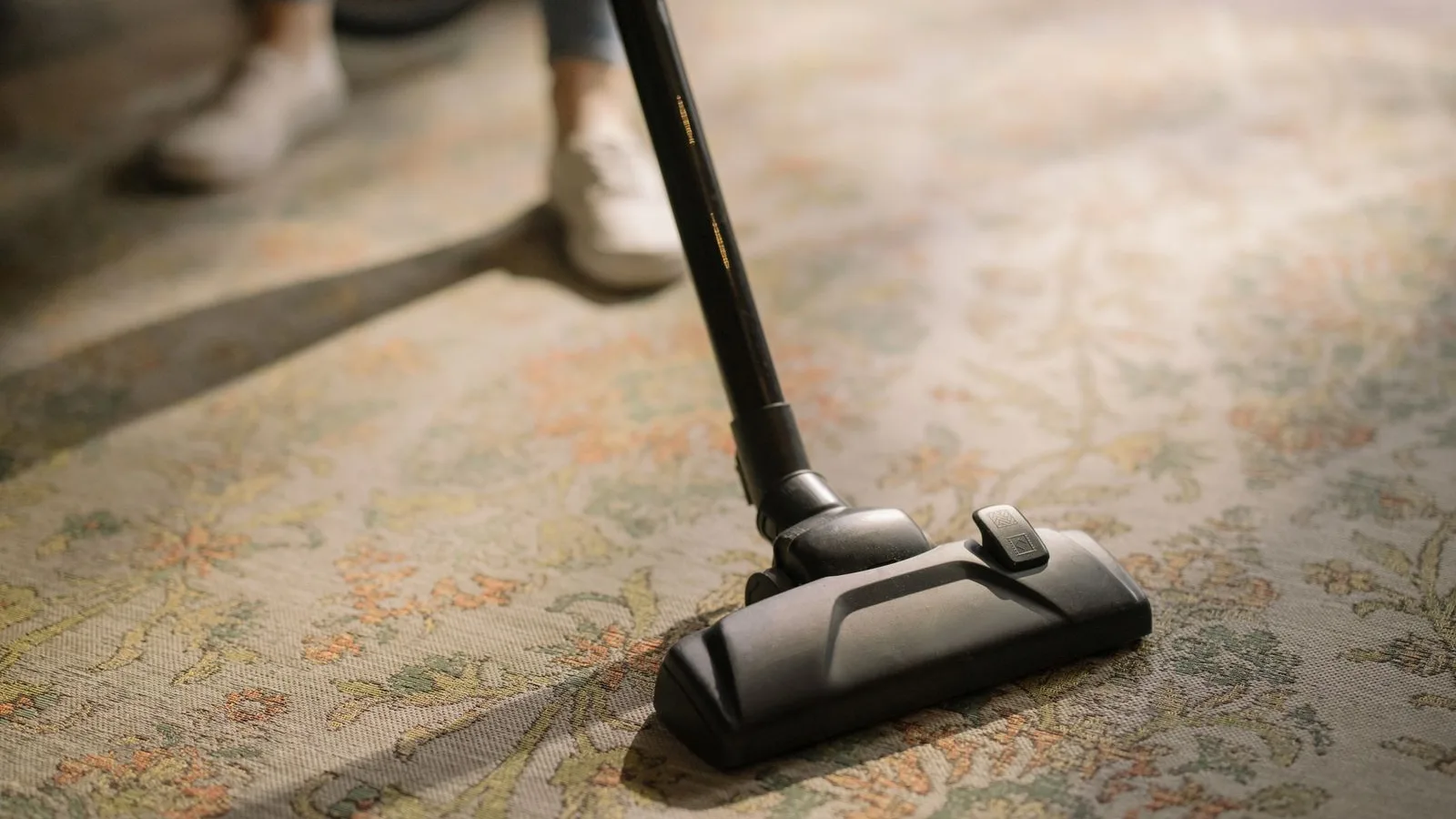
The Carpet and Rug Institute recommends vacuuming at least once a week with more in high-traffic areas, and puts a professional deep clean at every 12 to 18 months as a general baseline. Allergy households usually want that more often. Use a vacuum with a HEPA filter if you can, which the EPA recommends for carpet and fabric-covered furniture.
Then a detail almost nobody knows. Vacuuming itself stirs allergen into the air for 20 minutes afterwards, according to the National Asthma Council Australia, even with a HEPA machine. If you are the allergic one in the house, get somebody else to do it or leave the room while it settles.
Wash bedding weekly in hot water, keep rooms ventilated, and dry spills quickly rather than letting them sit. A mattress clean is worth considering too, since mites are denser in beds than in floors. If children are the reason you are reading this, our post on children's allergies covers that side of it.
We are a family-owned team in Point Cook and Melbourne's west, and we will tell you when a clean is not the answer to what you are describing. Call (03) 4328 5637 or get a quote.
Frequently Asked Questions
Can carpet cleaning help with allergies?
Carpet cleaning lowers the amount of allergen material sitting in the pile, which is worth doing if carpet is part of your exposure. Carpet cleaning is not a treatment for an allergy, and it will not remove dust mites completely.
Does professional carpet cleaning remove dust mites?
Professional carpet cleaning reduces dust mites and the allergen they leave behind, and does not eliminate them. ASCIA states that no vacuum, spray or cleaning process removes house dust mites entirely, so treat any promise of elimination as a warning sign.
Is damp carpet worse for allergies than dirty carpet?
Damp carpet is often the bigger problem, because moisture is what lets mould establish. The US EPA notes that materials dried quickly usually do not grow mould, which is why how much water comes back out of the carpet matters more than how much went in.
Which carpet cleaning method is better for allergy sufferers?
Neither method wins outright, and the carpet decides. Hot-water extraction suits deep soil and urine contamination, while dry carpet cleaning suits wool, fluffy pile and embedded pet hair, and it costs the same either way.
How often should carpets be cleaned in an allergy household?
The Carpet and Rug Institute suggests a professional deep clean every 12 to 18 months as a general baseline, and allergy households usually want it more often. Weekly vacuuming does more of the work than any single visit.