TL;DR:
- You can steam clean a couch only if the tag under the cushion says W or WS. S and X fabrics should never get steam, because steam is water.
- A home steamer loosens dirt but does not remove it. Wipe as you go, or the soil stays in the fabric.
- Some furniture makers advise against steam even on W fabrics, so read the care guide for your couch first.
- Too much steam in one spot leaves water rings and a damp cushion. Keep moving and dry it fast.
- A professional "steam clean" is usually hot-water extraction, which rinses the fabric and pulls the water back out.
People ask whether you can steam clean a couch because steam feels like the safe option: no detergent, just hot water. That is half right. Steam suits some fabrics well, and it can shrink or water-mark others.
This guide covers which couches can take steam, how to do it at home without soaking the cushions, and where a home steamer stops being enough.
Can you steam clean a couch?
Yes, you can steam clean a couch if its care tag has a W or WS cleaning code, and you should not if the code is S or X. Which?, the UK consumer body, puts it the same way in its sofa guide: make sure it is OK to get the sofa wet by checking for a W or WS code before you start.
The tag is usually under a seat cushion or on the underside of the frame. No tag means you are guessing, and guessing with heat and water on a couch gets expensive.
What does steam cleaning a couch actually mean?
It means one of two different things, and they do not clean the same way. A home steamer pushes hot vapour into the fabric. A professional "steam clean" is nearly always hot-water extraction, where heated water is sprayed in and vacuumed straight back out.
The difference matters. Vapour loosens dirt and body oils, but a steamer has no suction, so whatever it loosens stays put unless you wipe it away. Extraction rinses the soil out of the fabric and takes most of the water with it.
Which couch fabrics can you steam clean?
Fabrics coded W or WS can generally take steam, and fabrics coded S or X cannot. American Leather's guide to cleaning codes explains that S fabrics should never be cleaned with water because it can damage them or leave rings.
| Code | Steam? | Why |
|---|---|---|
| W | Usually yes | Made to take water-based cleaning |
| WS or W/S | Usually yes, with a test first | Takes water or solvent |
| S | No | Solvent only. Steam is water |
| X | No | Vacuum only, no liquid at all |
The code is the starting point, not the whole answer. Natural fibres need more care than polyester, even with a W on the tag. Velvet, silk, viscose and anything with a raised pile can mark or flatten with heat. We cover those in our fabric couch guide. Leather is a different job altogether, and steam is not part of it. See our leather couch guide for that.
Why some furniture makers say no to steam
A W on the tag does not always mean the maker is happy with steam. La-Z-Boy's care instructions for its W-coded fabrics say hot water extraction or steam cleaning is not recommended, and that cushion covers should not be removed and laundered either.
Steamer makers hedge as well. Kärcher, which sells steam cleaners, tells owners to check on a hidden spot whether the fabric reacts to the temperature, and says that if it does, the method is not suitable.
So read the care guide that came with your couch, especially while it is under warranty. If the maker says no steam, that settles it, whatever the tag says.
How to steam clean a couch at home, step by step
If the tag and the care guide both allow it, this is the order to work in.
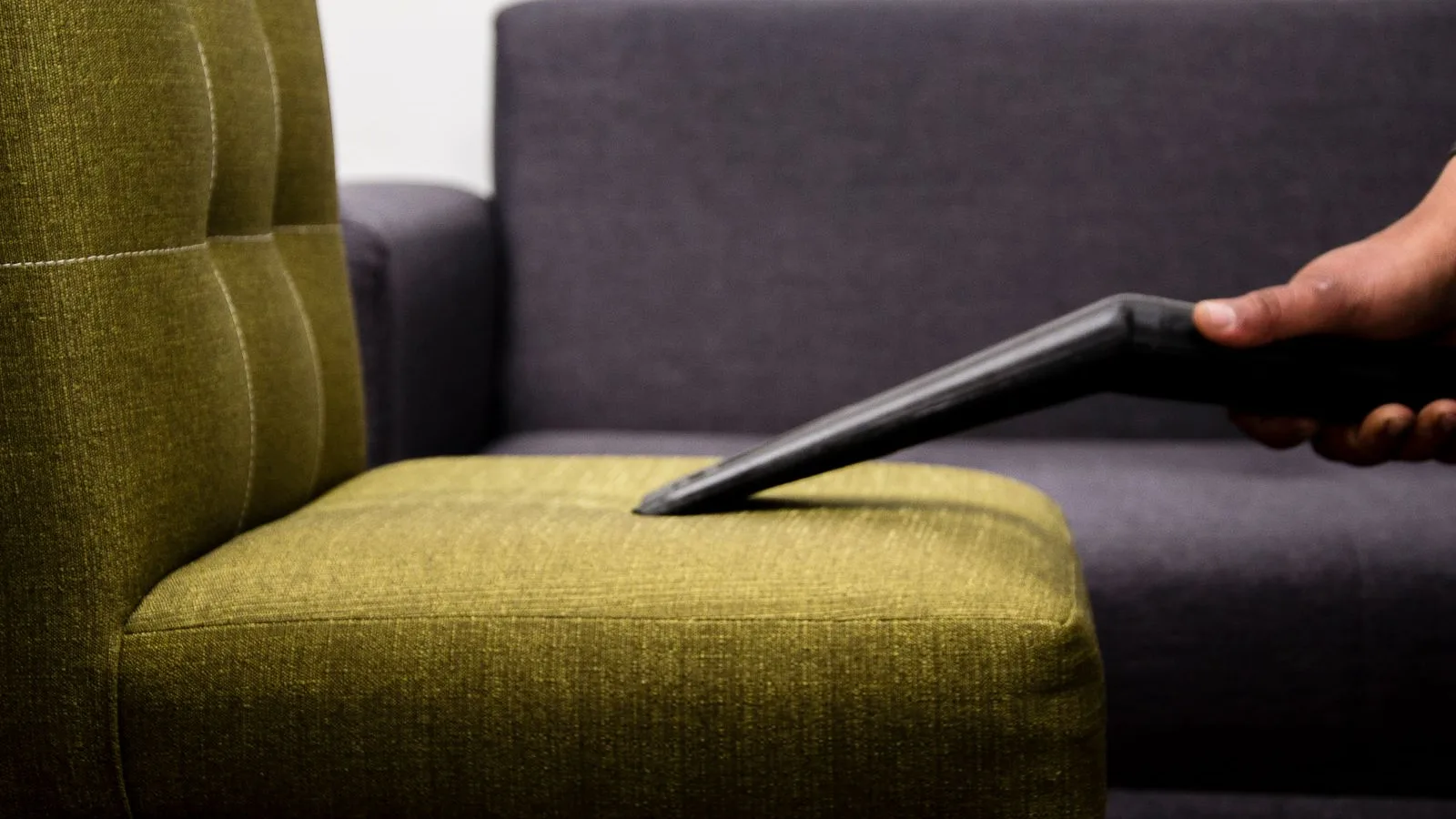
- Vacuum everything first. Seats, arms, back, under the cushions. Steam turns loose dust into mud.
- Test a hidden spot. One short pass on the back or under a cushion, then let it dry fully. Look for any colour change or a ring. The professional upholstery standard, ANSI/IICRC S300, expects cleaners to test before they clean, and it is a good habit at home too.
- Treat stains before you steam. Heat can set some stains for good. Our stain guide goes through them by type.
- Hold the nozzle at an angle and keep it moving. Kärcher's advice for small marks is to hold the nozzle at an angle, not straight on, with a microfibre cloth beside it to catch what the steam pushes out.
- Wipe as you go. Use a clean, white microfibre cloth and turn it often. This is the step that removes the dirt.
- Do not go over the same patch again and again. Homes & Gardens warns that repeated passes lead to water logging of the filling.
- Dry it straight away. Open the windows, run a fan, and stand loose cushions on their edge.
How long does a steam cleaned couch take to dry?
It depends on how much water went in, how thick the fabric is and how much air is moving, so there is no single number. A light pass with a steamer on a warm, breezy day dries far sooner than a couch that has been soaked.
What matters more is not leaving it damp. The US EPA's mould guidance says wet materials that are dried within 24-48 hours will not grow mould in most cases. A cushion that is still damp the next evening is a problem, and the foam inside holds water much longer than the cover does.
After our own couch cleans the fabric is usually dry within a few hours, and we give you a realistic time on the day. We don't run drying equipment. It air-dries, so open windows and a fan help.
Does steam cleaning a couch help with dust mites?
It can help reduce dust mite allergen, though it does not get rid of mites for good. A study published in Environmental Health Perspectives found that vacuuming and dry steam cleaning both produced a significant reduction in mite allergen in upholstered furniture. In carpet, steam plus vacuuming kept levels down for up to 8 weeks, while vacuuming alone lasted about 4.
Two things to take from that. Vacuuming did a lot of the work, so don't skip it. And the levels crept back, so this is upkeep and not a cure.
What goes wrong when you steam clean a couch?
Most of the damage I see from home cleaning comes from too much water, not too little effort.
- Water rings. Wet one patch and the edge dries as a tide line. Warwick's cleaning guide warns that over-wetting causes water marking and can wet the structure underneath the fabric.
- A sour smell a few days later. That is damp foam. I once recovered a living room carpet after the owner used a hire machine with far too much water and left the suction off. The backing and the timber underneath were soaked and the room smelled sour. Getting the water back out took me about an hour and a half. A couch cushion soaks up water the same way.
- Flattened or shiny pile. Pressing a hot nozzle into velvet or chenille crushes it.
- Dirt left behind. If you steam without wiping, the soil just moves around. Any detergent left in the fabric goes sticky and picks up new dirt faster.
When is a professional couch steam clean worth it?
It is worth it when the couch is properly dirty and not just stale, when the stains are old, or when you are not sure what the fabric is. Body oil on arms and headrests, drink spills that have soaked in, and a couch that has not been cleaned in years all need the soil rinsed out. A steamer can't do that.
Our couch cleaning starts with identifying the fabric and testing it. Then we pre-treat, brush, and use hot-water extraction where the fabric suits it. If water is the wrong choice for your fabric, we tell you before we start. A typical three-seater takes me about 40 minutes.
Common food and drink marks are treated as part of the clean at no extra charge. Pet urine is quoted separately because it needs an enzyme treatment. Pricing is per seat with a minimum per visit, and we confirm the scope before starting. Some marks are permanent, and we say so upfront.
One job that comes to mind: 10 dining chairs with food stains, body oils and water marks on the seats. After the clean the customer noticed a big difference and was happy with the result. Dining chairs and armchairs come under our upholstery cleaning service, and it is the same process.
Frequently asked questions
Can you steam clean a couch with a clothes steamer?
On a W or WS fabric a garment steamer can freshen the surface and relax creases, but it does not lift dirt out. Nothing collects the soil it loosens, so wipe with a clean microfibre cloth as you go and keep the steamer moving.
Can you steam clean a leather couch?
No. Heat and moisture can dry leather out and damage the finish. Leather needs a pH-neutral leather cleaner and a conditioner, not steam.
Can you steam clean a microfibre couch?
Only if the tag says W or WS. Plenty of microfibre and microsuede couches are coded S, which means solvent only, and steam is water. Check the tag before anything else.
How often should you steam clean a couch?
Once a year suits most family couches. Warwick, the Australian fabric maker, suggests an overall clean every 12 months for a family room lounge. Homes with pets or young kids may want it more often, with regular vacuuming in between.
Is professional couch steam cleaning different from a home steamer?
Yes. What most cleaners call steam cleaning is hot-water extraction: the fabric is rinsed with heated water and the water is vacuumed straight back out with the soil in it. A home steamer loosens dirt with vapour but has no suction to remove it.