TL;DR:
- Check what you actually have. A real Persian rug is hand-knotted, usually wool pile on a cotton base. Many "Persian" rugs are machine-made, and some are viscose.
- Vacuum gently with suction only, in the direction of the pile, and do the back now and then.
- Blot spills with cool water. Never scrub, and never use a home steam cleaner on one.
- Dyes, fringes and leftover detergent are where most Persian rug cleaning goes wrong. Test before you treat.
- An everyday wool Persian rug can be cleaned on-site with care. Silk or antique pieces are worth a specialist wash.
Most people who ask how to clean a Persian rug are worried about one thing: making it worse. That worry is fair. A hand-knotted rug reacts to water and detergent very differently from the carpet in your bedroom.
This guide covers how to tell what kind of rug you have, what you can safely do at home, what to avoid, and when Persian rug cleaning is better left to someone else.
How do you clean a Persian rug?
You clean a Persian rug gently and with as little water as you can get away with: regular suction-only vacuuming, quick blotting of spills, a dye test before any wet cleaning, and a proper professional clean every so often.
The heavy work is the part to be careful with. Everything below is about doing the light work well at home and choosing the right kind of clean when it needs more.
Is your rug actually Persian?
Possibly not, and it matters, because the safe method depends on the fibre and how the rug was made. Britannica notes that in traditional Oriental rugs wool is the main pile fibre, with cotton most often used for the base. That base is a grid of threads, and on a hand-knotted rug the warp ends form the fringe.
Three quick checks:
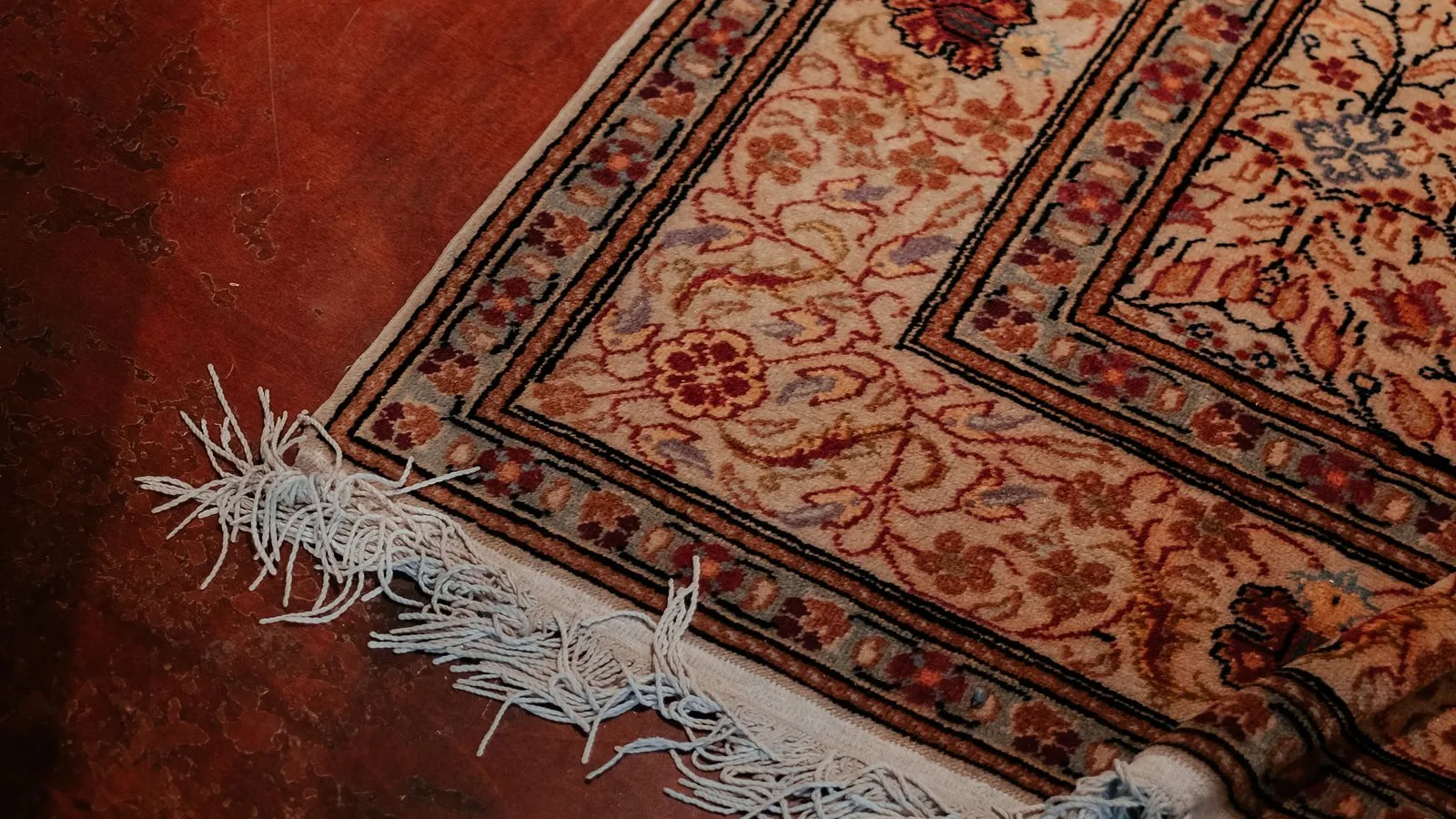
- Flip a corner. On a hand-knotted rug the pattern shows clearly on the back, knot by knot. A stiff mesh or a glued backing usually means machine-made.
- Look at the fringe. If it is the end of the threads running through the rug, it is part of the structure. If it is a strip sewn onto the edge, the rug was made by machine.
- Read the label. Cleanfax, a trade magazine for cleaners, points out that rayon is sold as art silk, viscose and bamboo silk, and that many owners miss the "art" and believe they own a silk rug.
That last one catches people more than any other. A lot of shiny "Persian-style" rugs are viscose, and viscose behaves nothing like wool.
What can you safely do at home?
More than you might think, as long as it stays dry or close to it.
- Vacuum with suction only. The Canadian Conservation Institute says upright vacuums and beater bars are never appropriate on museum textiles, and to follow the direction of the pile without pressing the nozzle down. A rotating brush pulls at knots and frays the fringe.
- Do the back as well. The George Washington University Textile Museum advises vacuuming the back as well as the front for a rug in constant use. Grit works its way down into the foundation and wears the knots from underneath.
- Lift it once a year. The US National Park Service's collection manual says to vacuum the floor underneath, the padding and the back of a rug at least once a year. The same page warns against rubber non-skid pads.
- Turn it around. Rotating the rug every few months evens out sun fading and foot traffic.
- Blot spills straight away. Woolmark's advice for wool is to blot, not rub, pre-test any treatment on a hidden area for dye bleeding, and work from the edge of the stain towards the centre.
For more on everyday wool care, our guide to wool rug care goes into spot-cleaning in detail.
What should you never do to a Persian rug?
Never soak it or put a home steam cleaner on it. Scrubbing and strong household cleaners come a close second. Most damage that cannot be undone starts with one of these.
- No home steam cleaner or rental machine. The heat and water can make wool shrink and dyes run, and a weak rental machine leaves water sitting in the cotton base.
- No scrubbing. It spreads the stain and roughs up the pile. I'd say the same about any carpet; it is one of the common mistakes I see most.
- No bleach-style stain removers. Supermarket products with bleach-like ingredients can lighten the colour permanently, and on a patterned rug that shows as a pale patch in the design.
- No hosing it down in the backyard. A heavy wool rug holds a lot of water, and it can stay wet in the middle long after the surface feels dry.
Why does a Persian rug bleed, brown or yellow?
Because the dyes, the cotton base and some fibres react badly to water and to the wrong cleaning chemistry. Each one fails in its own way.
Dye bleeding. Rug dyes are not always stable. Rug specialist Lisa Wagner, writing in Cleanfax, says that alkaline residue left in a wool rug can lead to yellowing and fading and later dye migration. That is why a dye test comes before any wet cleaning.
Browning. Cotton fringes and foundations can turn brown when a rug stays damp too long. The fringe also shows dirt more than the wool does, and the same article notes a quick wipe will not get a cotton fringe clean.
Viscose damage. Cleanfax reports that viscose loses 30 to 50 percent of its strength when wet, and that hot water can make it bleed. I've inspected rugs that owners made worse with DIY cleaning, and the care label confirmed viscose. Treat a viscose rug like paper: as little water as possible.
Should a Persian rug be cleaned on-site or washed off-site?
It depends on the rug. An everyday hand-knotted wool rug in a family room can be cleaned on-site with care. A silk, antique or heirloom piece is often better off with a specialist who fully washes rugs in a workshop.
To be fair to the other side: some rug specialists argue every woven rug should be washed off-site. Wagner's view in Cleanfax is that on-site cleaning often leaves soil in the foundation and residue in the fibre. She has a point for expensive pieces, because a workshop can dust a rug thoroughly, rinse it fully and dry it flat.
We clean rugs on-site only. On the day we check the care label and the fibre first, look for dyes that might run, vacuum out dry soil before anything gets wet, and choose a method that suits that rug. We don't repair fringes or replace dye that has already gone. If we think your rug needs a full wash rather than what we do, we'll say so before we start.
One rug that comes to mind was a hand-knotted wool area rug with a heavy pet urine smell and dark traffic soil. It needed an enzyme treatment first, then a clean, and it came up well. Pet urine is a separate job from the clean itself; our post on urine in rugs explains why a rug holds it differently from carpet.
Drying time varies with the thickness of the rug, but it is usually within a day. Keep it flat with air moving around it and stay off it until it is dry right through.
Watch for moths and carpet beetles
Their larvae eat wool, usually where nobody looks: under furniture, under the rug and in corners that never get vacuumed. The Australian Museum says carpet beetle larvae hide in dark, undisturbed areas and that they damage carpets.
That is another reason to vacuum the back and the floor underneath, and to move heavy furniture off the rug now and then. Bare patches where the pile looks grazed down to the knots, or fine sandy debris under the rug, are worth checking closely.
Frequently asked questions
Can you clean a Persian rug at home?
You can look after one at home. Vacuum it gently without a beater bar, vacuum the back now and then, and blot spills straight away with cool water. A full wet clean is a different job. Too much water, heat or the wrong detergent can make the dyes run or brown the cotton fringe.
Can you steam clean a Persian rug?
Not with a home steam cleaner. Heat and a lot of water are what make wool dyes bleed and wool shrink, and a rental machine leaves water in the foundation. A professional can clean a hand-knotted wool rug on-site with a method chosen for that rug and its dyes.
How do I know if my Persian rug is real?
Turn a corner over. On a hand-knotted rug the pattern shows clearly on the back, knot by knot, and the fringe is the end of the threads that run through the rug. On many machine-made rugs the back is a stiff mesh and the fringe is sewn on. A label saying art silk or viscose means it is not silk at all.
Why did my Persian rug turn brown after cleaning?
Usually because it stayed wet too long or detergent was left in it. Wool dyes can move when the rug is soaked or the cleaner is too alkaline, and cotton fringes and foundations can go brown as they dry. Viscose rugs brown and yellow very easily when wet.
Do you pick up Persian rugs for cleaning?
No. We clean rugs on-site at your home, with no pickup or drop-off. We check the fibre and the care label first and choose the method from that. If your rug is silk, antique or one we think needs a full wash, we will tell you before we start.
Getting a Persian rug cleaned in Melbourne's west
If your rug is wool and in everyday use, our rug cleaning is done at your home in Point Cook and the western suburbs. Rugs are priced by size, there is a minimum per visit, and pet urine treatment is quoted separately. When you ask for a quote, tell us the size and the fibre if you know it. If the label says viscose or silk, mention that too.