
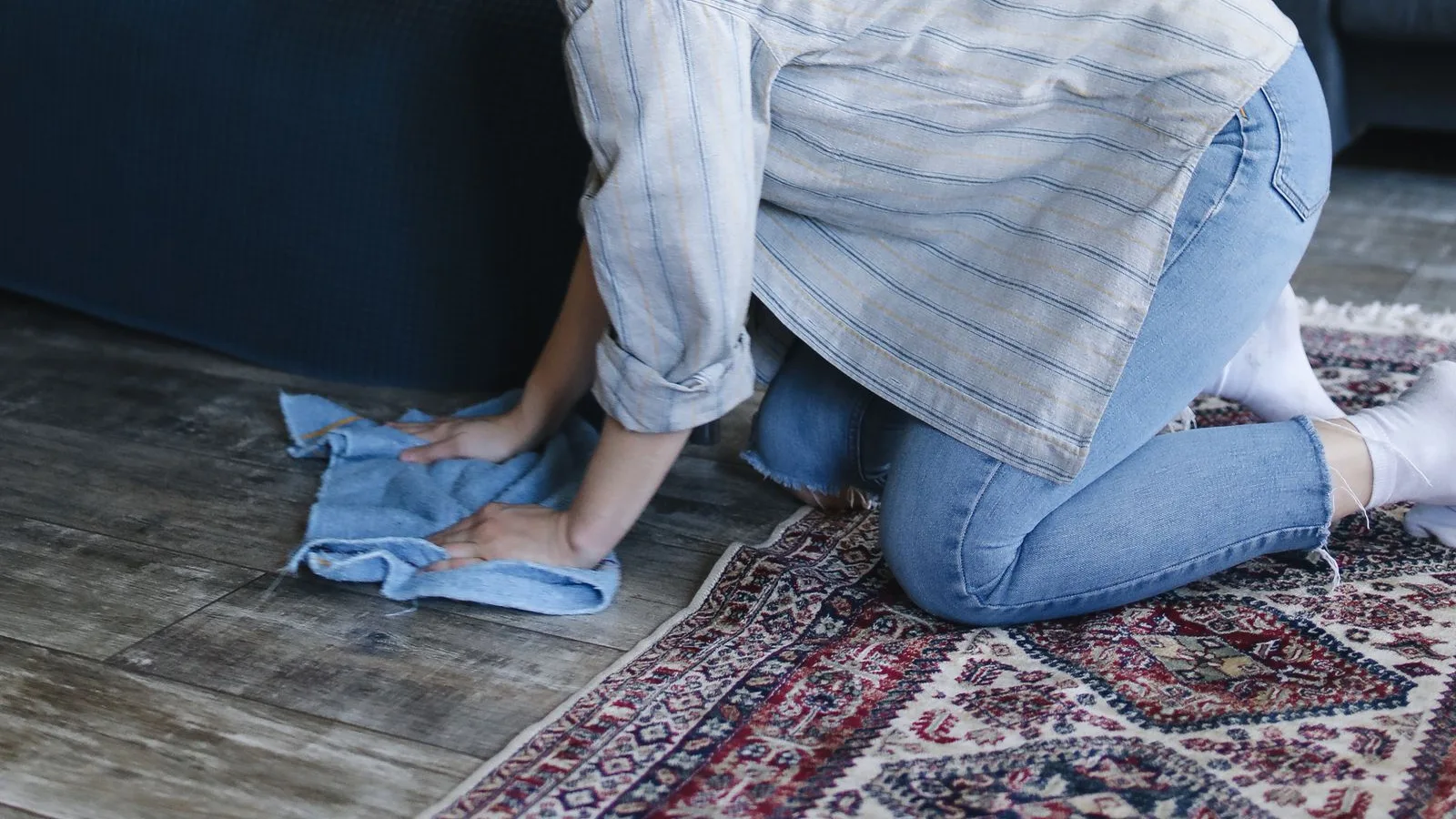
TL;DR:
- Over-wetting does more damage than any other DIY mistake, because it reaches the backing and the floor underneath.
- Scrubbing spreads a stain and permanently roughs up the pile. Blot straight down, from the outside edge inwards.
- Some supermarket spot removers behave like a mild bleach. A pale ring is permanent.
- Detergent left in the pile stays sticky, so a badly rinsed carpet gets dirty faster than before.
- Wool and viscose punish a guess. Read the care label before anything wet touches them.
Most of the carpet cleaning mistakes I get called out to fix were made by someone being careful. They read something first, bought a product that looked right, hired a machine and worked hard at it. The carpet came out worse than it went in.
Damage in this trade rarely comes from laziness. It comes from a sensible action applied to the wrong fibre, or the right one carried on too long.
What are the most common carpet cleaning mistakes?
The five that cause almost all the damage are over-wetting, scrubbing instead of blotting, reaching for a supermarket stain remover without reading it, leaving detergent in the pile, and treating every carpet as the same fibre.
Four of the five only show up a day or two later, which is why they get repeated.
The benchmark for this work is the ANSI/IICRC S100 standard, and the part worth borrowing is the order of operations: identify the fibre, then the chemistry, then the method. Most home damage happens because the machine arrives first and the fibre gets discovered afterwards.
Why is over-wetting the worst carpet cleaning mistake?
Because water is the only mistake on this list that travels. It reaches the backing, the underlay and the floor beneath, which is where a sour smell comes from and where surface cleaning cannot follow.
CHOICE, which tests hire machines for Australian households, calls over-wetting the most common problem in carpet cleaning, whether the job is done professionally or at home. Its shampooer testing is blunter: carpet left too wet may go mouldy or stale smelling before it finishes drying.
There is a clock on it. The US EPA's guidance is that wet material dried within 48 hours will usually not grow mould, and Victoria's Better Health Channel gives matching mould removal advice: drying the area properly is what stops it returning.
One job comes to mind. A homeowner had cleaned a living room with a hired machine and, without realising, run the whole thing with the vacuum switched off. The backing and the wooden subfloor beneath were soaked, and by the time I arrived it had turned sour. Extracting the moisture and applying a treatment took about an hour and a half. It worked, and it was still a worse day than booking a clean.
The test is simple. If the carpet is still damp the next morning, too much water went in. That is also the usual answer when someone asks about a damp smell after cleaning.
Should you scrub a stain out of carpet?
No. Scrubbing drives the stain deeper into the pile and roughs up the fibre in a way that does not recover, so you trade a mark for a permanently fuzzy patch.
The Carpet and Rug Institute's rule is blot, don't scrub: bristles and scrubbing damage carpet, with fraying and texture change the likely results. Australian manufacturer Godfrey Hirst says the same in its care guide, warning that a fuzzy area may result.
On a fresh spill, do this instead:
- Lift the solids off with a spoon, not a cloth.
- Blot with a clean white cloth, pressing straight down.
- Work from the outside edge inwards so the stain does not spread.
- Rinse with clear water and blot again until nothing transfers.
- Weigh a dry towel down over it and leave it alone.
The full method for the drink behind most of these calls is in our coffee stains guide.
Can supermarket stain removers permanently damage carpet?
Yes, and this one ends worst, because a bleached patch cannot be cleaned back.
Some general-purpose spot removers behave like a mild bleach. I have been to homes where a small mark was treated with a supermarket product and the result was a permanent pale ring, lighter than the carpet around it. There is nothing left to extract.
Oxygen bleach is the one people underestimate, because it does not read as bleach on the bottle. WoolSafe tested peroxide on wool and found that even a 3% hydrogen peroxide solution lightens an undyed wool carpet by roughly as much as two months of direct sunlight.
Two habits will keep you out of trouble:
- Test any product on a hidden patch, inside a wardrobe or under a couch, and let it dry fully first.
- Read the label for bleach, oxy or whitening wording. If it is there, it does not go near carpet you care about.
The fibres that punish a guess
Wool is a protein fibre and reacts badly to anything strongly alkaline, which describes most general-purpose carpet shampoo, because that is formulated for synthetics. You get colour loss and a dull, stripped finish, and by the time it shows it is permanent.
Viscose is worse. Made from wood pulp, it behaves a little like paper once wet: it loses most of its strength, distorts underfoot and can turn yellow or brown as the fibre reacts to the moisture. I have inspected rugs that owners made worse at home, turned the corner over, and found viscose on the care label. That is not a stain. That is the fibre changing.
Read the label before anything wet touches it. If it says viscose, rayon, bamboo silk or art silk, stop. If it is wool, our wool rug guide covers what is safe to do yourself.
This is why I do not offer a single method. Heavy urine and deep soil want extraction, while wool, fluffy pile and embedded pet hair suit dry carpet cleaning. The price is the same either way.
Does leftover shampoo make carpet dirty faster?
Yes. Detergent left in the pile stays slightly sticky, and sticky carpet collects soil from every foot that crosses it, so a badly rinsed carpet greys off faster than it did before it was cleaned.
Godfrey Hirst's care guide puts it plainly: residue attracts soil and creates false staining. The machine is usually the reason rather than the person, because a small tank pushes only so much rinse water through and a small vacuum pulls only so much back. CHOICE's advice is sound: keep going over the carpet in suction mode well past the point where you think you are finished.
Deodorising powders are the same failure with a nicer label. Whatever does not come back up settles into the base of the pile and holds dirt there. If a room smells, the smell has a source, and covering it is not treating it.
Is skipping the vacuum really a mistake?
Yes, and it quietly costs the most, because dry soil is abrasive. Sand and grit sit at the base of the pile and cut the fibre every time somebody walks over it, which shows up months later as dull traffic lanes no clean will bring back.
The Carpet and Rug Institute's maintenance guidance and Godfrey Hirst both ask for vacuuming at least weekly, and more often where traffic is heaviest. The Carpet and Rug Institute also asks for a professional deep clean every 12 to 18 months, the same interval Godfrey Hirst sets for its Australian ranges.
If anyone in the house has asthma or allergies, the National Asthma Council Australia's dust mite factsheet adds a useful detail: vacuuming lifts dust mite allergen into the air for up to 20 minutes, so the person who reacts should not be the one pushing it.
What happens when a DIY clean has gone wrong
Most of it is recoverable, just slower and less certain than the original clean.
Inspect first and work out what actually happened, because over-wetting, residue and bleaching all present as "the carpet looks bad" and need different answers. Then vacuum thoroughly, give the pre-treatment enough dwell time instead of rushing it, and extract properly.
What cannot be recovered: colour loss from a bleaching product, pile scrubbed fuzzy, browned viscose, and ordinary wear. You should hear that at the inspection, not after paying. Cleaning improves carpet. It does not rebuild it.
The rest is straightforward. Carpet cleaning is priced per room and confirmed before I start. Coffee, wine and food stains are treated at no extra charge, and set-in pet urine is quoted separately because it needs enzyme treatment. There is a 7-day satisfaction guarantee. Steam-cleaned carpet is walk-on ready in 4 to 6 hours, dry-cleaned carpet in 1 to 2 hours. I do not move furniture, so anything you want cleaned underneath needs moving before I arrive.
Common questions about carpet cleaning mistakes
What is the most common carpet cleaning mistake?
Over-wetting. Consumer group CHOICE calls it the most common problem in carpet cleaning, professional or DIY. Too much water reaches the backing and the floor underneath, where surface cleaning cannot reach it. If the carpet is still damp the next morning, too much water went in.
Can you ruin carpet by cleaning it yourself?
Yes, in four main ways. A bleach-based or oxy spot remover can lighten the colour, scrubbing can rough up the pile, a hire machine can soak the backing and subfloor, and general-purpose shampoo can change wool or viscose fibre itself. All four are permanent.
Why does my carpet get dirty faster after cleaning?
Almost always detergent residue. Anything left in the pile stays slightly sticky, so it collects soil from every foot that crosses it. It usually means the rinse and extraction stage was cut short.
Is it bad to scrub a carpet stain?
Yes. Scrubbing pushes the stain deeper and permanently distorts the fibre, so you trade a mark for a fuzzy patch. Blot straight down with a white cloth, working from the outside edge inwards.
Can a professional fix a carpet I have already damaged?
Often, but not always. Over-wetting, sour odours and detergent residue are usually recoverable with proper extraction and enough dwell time. Colour loss, pile scrubbed fuzzy and browned viscose are not. An honest cleaner tells you which one you have at the inspection.
If you have already tried something and it went sideways, that is a normal phone call, not an embarrassing one. Tell me what you used and what the carpet did afterwards. That changes the approach more than the stain does.