
TL;DR:
- Traffic lanes are two problems at once. Loose grit that a vacuum can take, and oily soil bonded to the fibre that it cannot.
- Vacuum the lanes more often than the room, slowly, with overlapping passes. CHOICE gets noticeably more out of ten passes than four.
- Grit is abrasive. It scratches fibre as people walk on it, and that damage is permanent even after the dirt comes out.
- Rapid resoiling after a clean is almost always leftover detergent, not bad luck.
- If the lane still looks grey under bright light after a proper clean, you are looking at wear, not dirt.
Every carpet in the house gets dirty at the same rate except the parts people walk on. The hallway, the path from the kitchen to the couch, the first metre inside the front door. Those go grey while the rest of the room stays fine, and ordinary vacuuming does not bring them back. Here is what is really happening in a high traffic carpet lane, and what shifts it.
What is the best way to clean high traffic carpet?
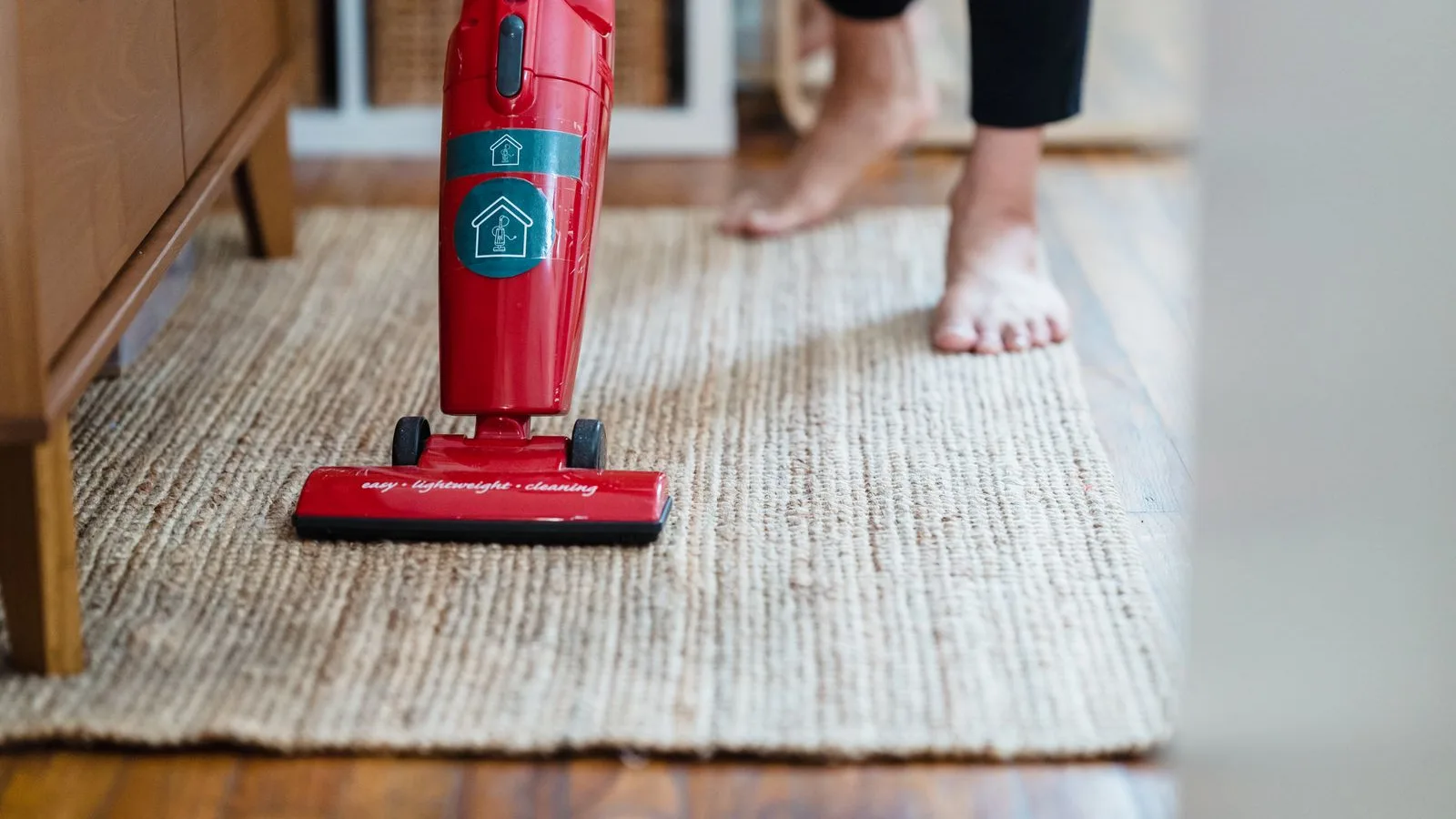
Vacuum the lanes far more often than you vacuum the room, then have them properly extracted before the soil has time to bond to the fibre. That order matters, because most of the material in a traffic lane is dry and a vacuum can still take it.
The Carpet and Rug Institute's maintenance guidance sets the baseline: vacuum daily in high-traffic areas, twice a week in medium-traffic areas, and weekly where nobody much walks. Their residential advice adds the part people skip, which is that the more foot traffic a carpet gets, the more it needs vacuuming.
Most homes vacuum the whole floor on one schedule. The lanes needed three times as much.
Why do traffic lanes go grey before the rest of the carpet?
Because two things are happening in the same square metre, and only one is dirt you can see. Dry grit tracked in on shoes, and oily soil from feet, cooking and skin that binds to the fibre and holds the grit in place.
The grit is the expensive half. The Carpet and Rug Institute is direct about it: regular vacuuming removes soil that can damage the fibre and reduce the useful life of the carpet. Sharp mineral particles do not sit politely in the pile. People walk on them, and they grind.
That changes what vacuuming is for. Vacuuming a traffic lane pulls grit out before anyone stands on it. Tidying is a side effect.
They also put a professional deep clean at every 12 to 18 months for the embedded grime a vacuum cannot reach. Australia and New Zealand have a published standard for this kind of maintenance, AS/NZS 3733, covering cleaning techniques and vacuum filtration.
Is it dirt or is the pile worn out?
Test it in bright daylight. If the lane looks duller from one direction and closer to normal from the other, the fibre has been abraded and untwisted, and that is wear. If it looks uniformly darker from every angle, it is soil, and soil comes out.
This is the conversation I would rather have before a clean than after. Cleaning a worn lane still helps, because the soil in it is real and it does leave. What cleaning cannot do is put twist back into fibre that thousands of footsteps have scuffed.
Matted pile is a separate thing and often recoverable. If that is what you are seeing rather than colour change, our post on reviving pile covers it.
Vacuuming the lanes properly
Speed is the variable nobody adjusts.
CHOICE tests vacuums on Australian carpet by embedding sand in it, then measuring what comes back out. Their test method runs two scenarios: a quick everyday clean at four passes, and a complete carpet clean at ten. They are separate scores because they give different results on the same machine and the same carpet.
Four practical points for the lanes:
- Go slowly and overlap each stroke. The machine needs contact time to pull grit out of the base of the pile.
- Vacuum across the lane as well as along it. Soil packs in on one axis and lets go on the other.
- On loop pile, turn the rotating brush off or change the head. A beater bar fuzzes loop and cut-loop construction.
- Do the lanes between full vacuums. Two minutes in the hallway several times a week beats one long Saturday session.
If somebody in the house has asthma or a dust mite allergy, Better Health Channel notes that vacuuming pushes allergen into the air for up to 20 minutes afterwards. Their asthma guidance suggests vacuuming when that person is not in the room, and using a HEPA filter machine where you can.
What actually works on a traffic lane at home?
Very little beyond vacuuming, which is worth knowing before you spend a Saturday on it. The bonded oily film needs a cleaning solution, dwell time and mechanical extraction. A supermarket spray gives you one of the three.
I have seen the damage from the wrong product often enough to be blunt about it. Some cheap stain removers behave like a bleach and permanently lighten carpet, so you trade a grey lane for a pale patch nobody can fix. Hard scrubbing is the other one. It spreads soil sideways, distorts the pile and wears fibre faster than the traffic was.
Hire machines are the bigger risk in a traffic lane, because that is where people work hardest and put down the most water. One customer washed a living room with a rental machine, used far too much water and left its vacuum switched off. The backing and the wooden subfloor went sour. Recovering it took about 1.5 hours of extraction and a treatment.
The reason that goes wrong so fast is timing. The US EPA's mould guidance says water-damaged areas and items need to be dried within 24 to 48 hours to prevent mould growth, and a soaked backing does not dry in a day on its own.
Our post on common mistakes goes through the rest of them.
What makes traffic lanes come back faster after cleaning?
Detergent residue, nearly every time. Cleaning product left behind in the pile stays tacky once it dries, and it holds every bit of soil that lands on it, so the lane darkens again within weeks and the clean gets blamed.
Residue is a cleaning failure, not an unlucky carpet. It happens when too much product goes down, or not enough water and suction comes back up, and traffic lanes get the heaviest pre-spray in the room.
The Carpet and Rug Institute's equipment testing requires machines to remove soil without adversely affecting the appearance or performance of the carpet, and their heavy traffic guidance lists removing residues as a reason for deep cleaning at all.
Scented deodorising powders are the same story. They settle deep into the pile and trap dirt rather than fixing anything.
When is a professional clean the right call?
When the lane no longer changes after a thorough vacuum, when there is an odour, or when you are handing the property back. Before that point you are usually paying for something a vacuum would have done.
Here is what happens to a traffic lane on the day. It is inspected, vacuumed, then pre-sprayed and agitated so the solution reaches the base of the pile and has time to work. Then it is extracted, either by hot-water extraction (what most people call steam cleaning) or by dry carpet cleaning if the carpet is wool, fluffy or full of pet hair. The method suits the carpet and costs the same either way.
Drying depends on which one we use. Hot-water extraction is normally walk-on ready in 4 to 6 hours. Dry carpet cleaning is usually 1 to 2 hours.
Two things before you book. We do not move furniture, so anything you want cleaned underneath needs moving before we arrive, and we clean around the rest. And carpet cleaning is priced per room with a minimum for the visit, so a hallway alone is rarely worth a call-out. There is a 7-day satisfaction guarantee: if something is not right, call and we re-clean it.
Keeping the lanes lighter between cleans
Prevention does more than anything else on this page. The Carpet and Rug Institute's advice is to stop dirt at the door with mats outside and in, and take shoes off when you come in.
Both halves matter. An outside mat scrapes grit off, an inside mat takes the fine material that survived it, and shoes off stops the rest. In Melbourne's west, with the clay soil and the building sites, a front door mat earns its keep quickly. Shifting furniture slightly every year or two helps too, because it moves where people walk.
If your lanes are past the point where any of this fixes them, we work across Point Cook, Werribee and Melbourne's west, and we will tell you when a clean will not achieve what you are hoping for. Call (03) 4328 5637 or get a quote.
Frequently Asked Questions
What is the best way to clean high traffic carpet?
Vacuum the lanes far more often than the rest of the room, with slow overlapping passes, then have them professionally cleaned before the soil bonds to the fibre. Vacuuming does most of the work, and a deep clean every 12 to 18 months handles what vacuuming cannot reach.
Why do high traffic carpet areas look grey even after vacuuming?
Grey lanes are usually a mix of oily soil bonded to the fibre and light scattering differently off scratched fibre. A vacuum only lifts loose dry soil, so the bonded half stays until hot-water extraction or a low-moisture clean removes it.
Can worn carpet traffic lanes be restored?
Soiled lanes clean up well. Worn lanes do not, because the damage is abraded and untwisted fibre rather than dirt. Cleaning a worn lane still improves it, and it will not look like the carpet beside it.
How often should high traffic carpet be cleaned?
The Carpet and Rug Institute recommends daily vacuuming in high-traffic areas and a professional deep clean every 12 to 18 months. Busy hallways in family homes usually want the professional clean nearer the 12 month end.
Why do traffic lanes get dirty again so quickly after cleaning?
Almost always detergent residue. Cleaning product left in the pile stays tacky and holds new soil, so the lane darkens again within weeks. Proper rinsing and extraction is what prevents it, not a stronger product.