TL;DR:
- Yes, a carpet can be dry cleaned, and it happens in your home. Nothing is collected, and no clothing-style solvent is involved.
- It is low moisture, not no moisture. The technicians who wrote the industry guidance call it minimum-moisture cleaning.
- Walk-on ready in about 1 to 2 hours, against 4 to 6 hours for hot-water extraction.
- It suits wool, fluffy pile, embedded pet hair and rooms that cannot stop for half a day.
- It is not the cheap option or the weak option. The price is the same, and heavy soil is the real reason to choose extraction instead.
The question usually arrives with a note of suspicion attached. People have heard a carpet can be dry cleaned, suspect something is being skipped, and want to know whether they are about to pay full price for half a clean.
Fair enough. The name is misleading, and the honest answer takes a minute longer than yes.
Can a carpet be dry cleaned?
Yes. Dry carpet cleaning is a recognised professional method, it happens on the floor in your house, and the carpet never leaves the room. What it is not is the process that happens to a suit. There is no solvent tank, no collection, no shop.
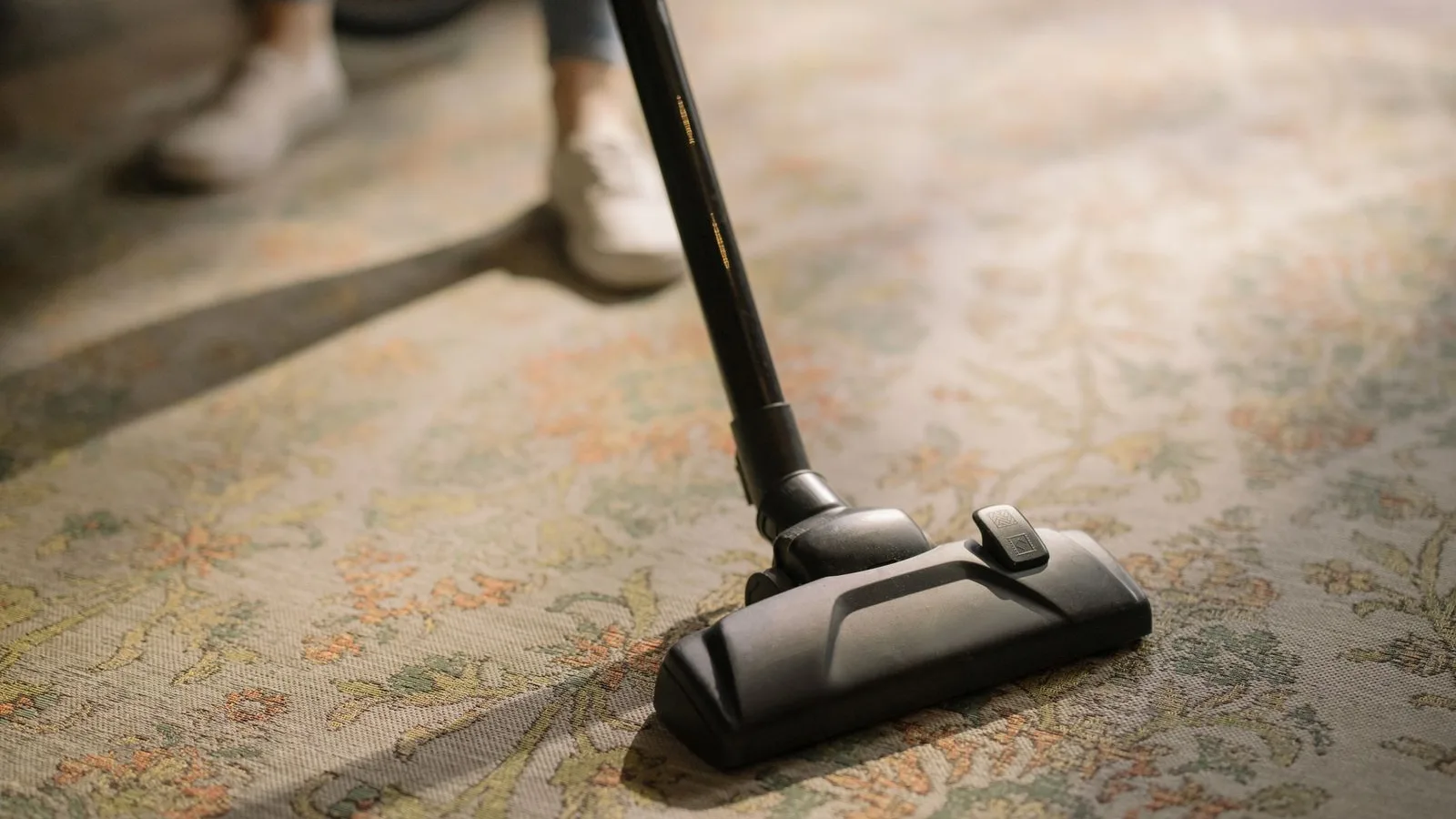
What actually happens is that a low-moisture cleaning solution is worked down through the pile by a machine with counter-rotating brushes, so the carpet is agitated and cleaned in the same pass. The soil binds to the compound, and the compound comes back out.
The IICRC's S100 standard, the reference document for professional cleaning of textile floor coverings, treats it as one of several legitimate routes to a result, not a lesser alternative. The Carpet and Rug Institute's approval program tests low-moisture equipment as its own category, separate from extractors.
What actually happens during a dry carpet clean?
The cleaning itself is four stages, and the first one does more work than people expect.
- Inspection. Fibre, condition, stains, and anything that changes the method. This is also where you find out what is realistically going to shift and what is permanent.
- Pre-vacuuming. Dry soil comes out dry. Skip this and everything after it turns grit into mud.
- Low-moisture application and agitation. The solution goes down, the brushes work it through the pile, and the machine cleans as it agitates.
- Extraction and grooming. The compound and the soil it has bound come back out, the pile is groomed, and we tell you a realistic time before you walk on it.
Spots, grease marks and traffic lanes get treated individually along the way, and general sanitising and deodorising is included either way.
One thing that does not change with method: we clean around furniture. Anything you want cleaned underneath needs to be moved before we arrive.
Is dry carpet cleaning actually dry?
No, and the industry is refreshingly blunt about this. The Society of Cleaning and Restoration Technicians, answering exactly this question about the S100, says plainly that none of these methods are actually dry, and that the correct description is a minimum-moisture cleaning method.
That matters to you for one practical reason. If a cleaner tells you the process is completely water-free, they are either simplifying badly or they do not know the method. Every version of it puts some liquid into the carpet.
The useful measure is how much moisture is left behind when the job finishes, and every method leaves some. That is a real number the industry tests for: the Carpet and Rug Institute tests equipment on soil removal, residual moisture and appearance retention together, because a machine that cleans well and leaves the carpet soaked has not done the job.
Which carpets suit dry carpet cleaning best?
Four situations, and I choose this method for all of them regularly.
Wool and other natural fibres. Wool punishes over-wetting with shrinkage and browning. Keeping water out of the equation removes the main risk. Wherever there is doubt, the Carpet Institute of Australia's maintenance guidance is to check the manufacturer's warranty documentation before choosing a method, and that is worth doing on an expensive wool floor.
Long or fluffy pile holding pet hair. This is the one that surprises people. Hair works itself down between the fibres and a vacuum simply rides over the top of it. The counter-rotating brushes agitate and clean at once, and the hair lifts out with the compound. On fluffy carpet full of dog hair I will reach for the dry machine ahead of the extraction wand almost every time.
Rooms that cannot stop. Offices, a rental changeover with the inspection tomorrow, a rainy Melbourne week where nothing is drying anyway. One office had loop-pile nylon marked with grease and soil, and the business could not lose the floor for the afternoon. Dry cleaning lifted the marks and they were back on it the same day.
Delicate and moisture-shy fibres. Viscose is the extreme case. It behaves like paper when it gets wet, going yellow or brown, and I have inspected rugs a homeowner had already ruined with a bucket of water and good intentions. The care label said viscose. Water was never an option there.
When is dry cleaning the wrong choice?
When the soil is deeper than agitation can reach. That is the honest boundary, and worth stating rather than selling the method as universal.
Heavily soiled carpet, dark matted traffic lanes and deep pet urine contamination generally want hot-water extraction, because flushing the pile and pulling the water straight back out physically removes what agitation can only loosen. Pet urine also needs its own pet treatment first regardless of which method follows, since heat can set protein stains.
That said, dry cleaning is not automatically ruled out on a dirty carpet. On a badly soiled floor covered in food stains I have used it and got most of them out. The judgement is made at the inspection, on your carpet, not from a rule in a brochure.
If you want the full comparison of the two methods, the steam vs dry breakdown covers it properly. Offering only one method is too limiting, which is why we run both.
How long does dry cleaned carpet take to dry?
About 1 to 2 hours before the carpet is ready to walk on, against 4 to 6 hours after hot-water extraction. There is no drying step, and nothing is blasted at the carpet to hurry it along. It air-dries, and we tell you a realistic time on the day.
The gap between those two numbers is the entire reason the method exists, and it is worth more than people assume. Moisture left sitting in carpet is what produces a musty smell a week later. The US Environmental Protection Agency's household guidance is to dry water-damaged areas and items within 24 to 48 hours to prevent mould growth, and Victoria's Better Health Channel makes the same point from the health side: there is no practical way to remove all indoor mould, so control the moisture instead.
None of that is an argument against extraction done properly, where the water goes in and comes straight back out. It is an argument against carpet left damp, which is what I get called to fix after someone hires a machine and leaves the suction off. That one took an hour and a half to recover, and the sour smell had reached the subfloor.
What it costs, and what to ask before you book
Dry carpet cleaning is priced exactly the same as steam here. Same room rates, same minimum for the visit, no surcharge either way. That is deliberate: the moment one method pays better than the other, the recommendation stops being honest. Our dry carpet cleaning page sets out what a visit includes.
Two questions worth asking whoever you book. Ask which method they would use on your carpet and why, and listen for whether the answer is about your fibre or about the only machine on their van. Then ask what happens if you are not happy, which for us is a 7-day satisfaction guarantee and a free re-clean.
Between professional visits, the maintenance that actually protects the carpet is unglamorous. The Carpet and Rug Institute recommends vacuuming weekly and a professional deep clean every 12 to 18 months, and blotting spills rather than scrubbing them. Reducing indoor humidity helps too, since dust mites thrive in warm, humid homes according to the National Asthma Council Australia.
The bottom line
A carpet can absolutely be dry cleaned. It is a proper method, not a shortcut, and on wool, fluffy pile, embedded pet hair or a floor that cannot stop, it is the better call.
It is also not magic. It is low moisture rather than none, and it does not reach as deep as extraction on a badly soiled carpet. Anyone who says one method wins every time is describing their equipment, not your carpet.
We are a family-owned team in Point Cook and we run both. Call (03) 4328 5637 or get a quote and we will tell you which one your floor actually needs.
Frequently Asked Questions
Can a carpet be dry cleaned?
Yes. Dry carpet cleaning is a recognised professional method performed in your home, using a low-moisture solution worked through the pile by a machine with counter-rotating brushes. It has nothing to do with the solvent process used on clothing, and the carpet never leaves the room.
Is dry carpet cleaning completely water-free?
No. It is a low-moisture process, not a zero-moisture one. Industry technicians describe these methods as minimum-moisture cleaning rather than dry cleaning, because a liquid pre-conditioner or a damp compound is always part of the job.
How long does dry cleaned carpet take to dry?
Normally 1 to 2 hours before you can walk on it, compared with 4 to 6 hours after hot-water extraction. The carpet air-dries, so airflow and the weather on the day matter. We give you a realistic time before we leave.
Is dry carpet cleaning as good as steam cleaning?
For everyday soil, traffic lanes and grease marks, it does a genuinely good job. For heavily soiled carpet and deep pet urine contamination, hot-water extraction reaches further, because flushing and extracting removes what agitation alone can only loosen.
Which carpets are best suited to dry carpet cleaning?
Wool and other natural fibres at risk of shrinkage, long or fluffy pile, carpet holding embedded pet hair, and any room that cannot be out of action for half a day. Delicate fibres and unstable dyes are the usual reason to keep water out of the job.