
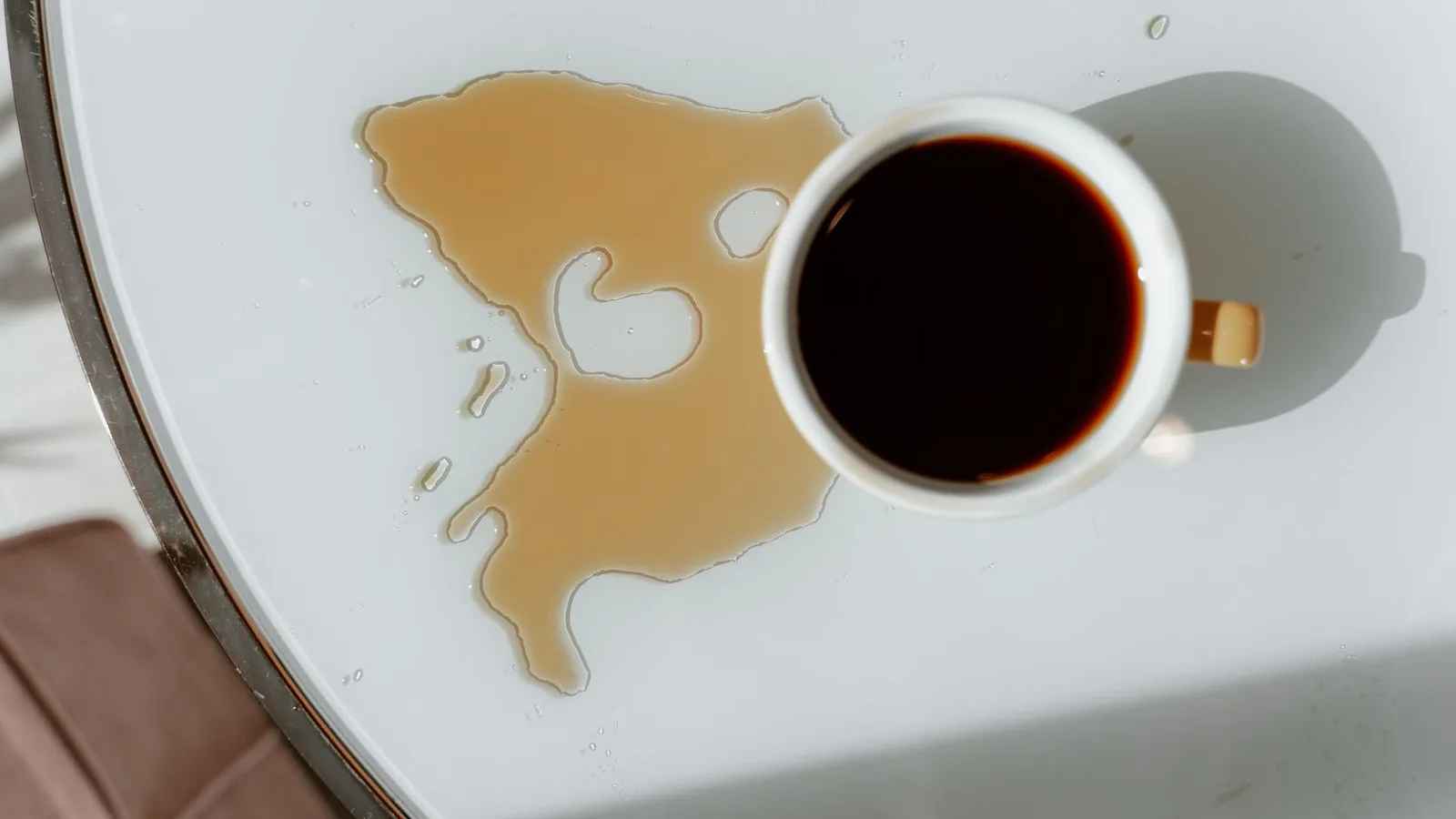
TL;DR: Blot a fresh coffee spill straight away with a clean, dry cloth, press, do not rub. Rinse with cool water and blot again, working from the outside in. If it needs more, use a little dish soap or a weak white-vinegar solution in cool water, then rinse with plain water and blot dry. Never use hot water or scrub hard, as heat and friction set the stain. For dried-in or milky, sugary coffee that keeps coming back, a professional carpet clean lifts it. Coffee is one of the common organic stains we treat as part of a standard clean.
Coffee is one of the most common spills I get called about, and it is also one of the most fixable, if you get to it the right way. The trouble is that most people reach for hot water and start scrubbing, which is exactly what turns a five-minute fix into a permanent mark. Here is the order I would follow at home, and an honest note on when it is worth handing over to us.
Why coffee stains carpet in the first place
Coffee is a tannin stain, the same family as tea and red wine. Tannins are plant compounds that bind readily to carpet fibres, which is why the mark spreads and grabs hold so fast. Add milk and sugar and you have a second problem: milk proteins and sugar dry into a sticky residue that attracts dirt, so an "old coffee stain" is often as much trapped grime as it is coffee.
Two things make a coffee stain set for good:
- Heat. Hot water opens the fibre and cooks the tannin in. Once it is heat-set, it is far harder to shift.
- Rubbing. Scrubbing frays the fibre tips and pushes the coffee deeper and wider. A stain that was the size of a coaster becomes a faded halo the size of a dinner plate.
So the whole home method below is built around one rule: cool, gentle, and blot, never hot, never scrub.
How to remove a fresh coffee stain, step by step
Speed matters more than any product. If you catch it while it is wet, you have the best chance.
- Blot up the liquid first. Press a clean, dry cloth or paper towel straight down and lift. Keep moving to a dry part of the cloth. You want to absorb as much coffee as possible before you add any water.
- Rinse with cool water. Dab, do not pour, a little cool water onto the mark, then blot again. Repeat. This dilutes the tannin and carries it up into the cloth instead of down into the underlay.
- Work from the outside in. Always blot from the edge of the stain toward the middle. This stops the ring spreading outward.
- If it needs more, mix a mild solution. A teaspoon of clear dish soap in a cup of cool water, or a weak white-vinegar-and-water mix, both work on fresh coffee. Dab it on, wait a minute, then blot.
- Rinse out the solution. Go back over the spot with plain cool water and blot until no suds or residue remain. Leftover soap acts like a magnet for dirt, so the spot goes grey later if you skip this.
- Dry it and weigh it down. Blot until barely damp, then lay a fresh dry towel over the area with a light weight on top for an hour to wick out the rest.
Resist the urge to check it every thirty seconds and rub. Patience and blotting beat elbow grease every time here.
What about milky or sugary coffee?
Same steps, but expect the sticky residue to need a second pass with the dish-soap solution. Sugar and milk are what make a spot feel crunchy or re-soil quickly, so rinse thoroughly at the end.
Do home remedies actually work?
For fresh spills, yes, the ones above are genuinely effective. A few notes on the popular ones:
- White vinegar loosens tannin and neutralises light odour. Always dilute it and always rinse after. Straight vinegar can dull some fibres.
- Bicarb soda sprinkled on afterwards helps absorb residual moisture and smell. Leave it, then vacuum.
- Enzyme cleaners are worth having for the milky, protein side of a latte spill.
Two things I would steer you away from: do not use hot or boiling water, and do not use a stiff brush. Both feel productive and both set the stain, the heat cooks the tannin into the fibre and the brush frays the pile and spreads the mark wider. Cool and gentle wins every time.
The honest limitation of any home method is depth. If the coffee soaked through into the underlay before you blotted it, surface cleaning cannot reach it, and the mark can wick back up as the carpet dries.
When to stop and call a professional
Hand it over when:
- The stain has already dried in and home blotting has not shifted it.
- It keeps coming back a day later, a sign the coffee reached the underlay.
- It is on a light, wool, or expensive carpet you would rather not experiment on.
- It is a large spill: a whole cup or pot across a big area.
Here is the good news on cost: coffee is an organic stain, and general sanitising, deodorising and common organic stains like coffee, wine and food are treated as part of a standard clean, not charged as an extra. (Pet urine is the exception; that is a separate, charged treatment because it needs a different process.) So getting a stubborn coffee mark seen to usually just means booking a normal carpet clean.
Spilled something that is not coffee? Our free carpet stain first aid tool covers twelve of the common ones, wine, pet accidents, blood, grease, ink, wax, with the same shape of answer: what to do in the first few minutes, what quietly makes it permanent, and the point where blotting stops being the right move.
How we treat a set-in coffee stain
When you book us, we do not just spray the visible mark and hope. We inspect the spot, pre-treat it to break the tannin's grip on the fibre, then flush it with hot-water extraction, heated solution injected into the pile and pulled straight back out along with the loosened coffee. That extraction step is the part a home cloth cannot replicate: it lifts the stain up and out rather than smearing it around, and it reaches deeper than surface dabbing can.
A couple of practical things worth knowing so there are no surprises:
- Move what you want cleaned under. I clean around furniture that stays put, so if the spill is under the coffee table, shift the table beforehand and I will get the whole area.
- Give it time to dry. Most carpets are touch-dry in about 4 to 6 hours afterward. Open a window and run a fan and you will be back on it the same day. For the full picture on drying, see how long to stay off carpet after cleaning.
I will always tell you upfront what I think I can achieve. Fresh-ish coffee comes up beautifully. Very old, heat-set stains that a previous owner scrubbed in years ago sometimes leave a faint shadow. I would rather say that before we start than oversell it.
The short version
Blot fast, rinse cool, work outside-in, and never bring heat or a scrubbing brush anywhere near it. That handles the great majority of coffee spills at home. For the ones that dried in, soaked deep, or keep resurfacing, a standard professional clean will almost always finish the job, and because coffee is a common organic stain, it is covered as part of that clean.
If a coffee mark has you stumped, or you would rather not risk a favourite carpet, we are a family-owned team in Point Cook rated 5.0 from 300+ reviews. Request a quote and we will match the method to your carpet and get it sorted.
Frequently asked questions
Does coffee stain carpet permanently?
Not usually, if you act quickly. Fresh coffee blotted and rinsed within a few minutes almost always lifts. The stains that set in are the ones left to dry, scrubbed hard, or hit with hot water first. Heat and rubbing are what make a coffee stain permanent, not the coffee itself.
Does vinegar remove coffee stains from carpet?
A weak solution of white vinegar and cool water helps on fresh coffee, mostly by loosening the stain so you can blot it out. It is a rinse, not magic, always follow it with plain cool water so no residue is left behind, and blot dry. On old, dried-in coffee it does very little.
Will a professional clean get out a coffee stain that has already dried?
Often, yes. Coffee is an organic stain, and it is one of the common ones we treat as part of a standard carpet clean at no extra charge. We pre-treat the mark, then flush it with hot-water extraction. Some very old or heat-set stains will not clear completely, and I will always tell you honestly what to expect before we start.
How long will the carpet take to dry after a professional stain treatment?
Most carpets are touch-dry within 4 to 6 hours. Thicker piles or humid days can take a little longer. Good airflow, an open window and a fan, keeps it well inside that window.