
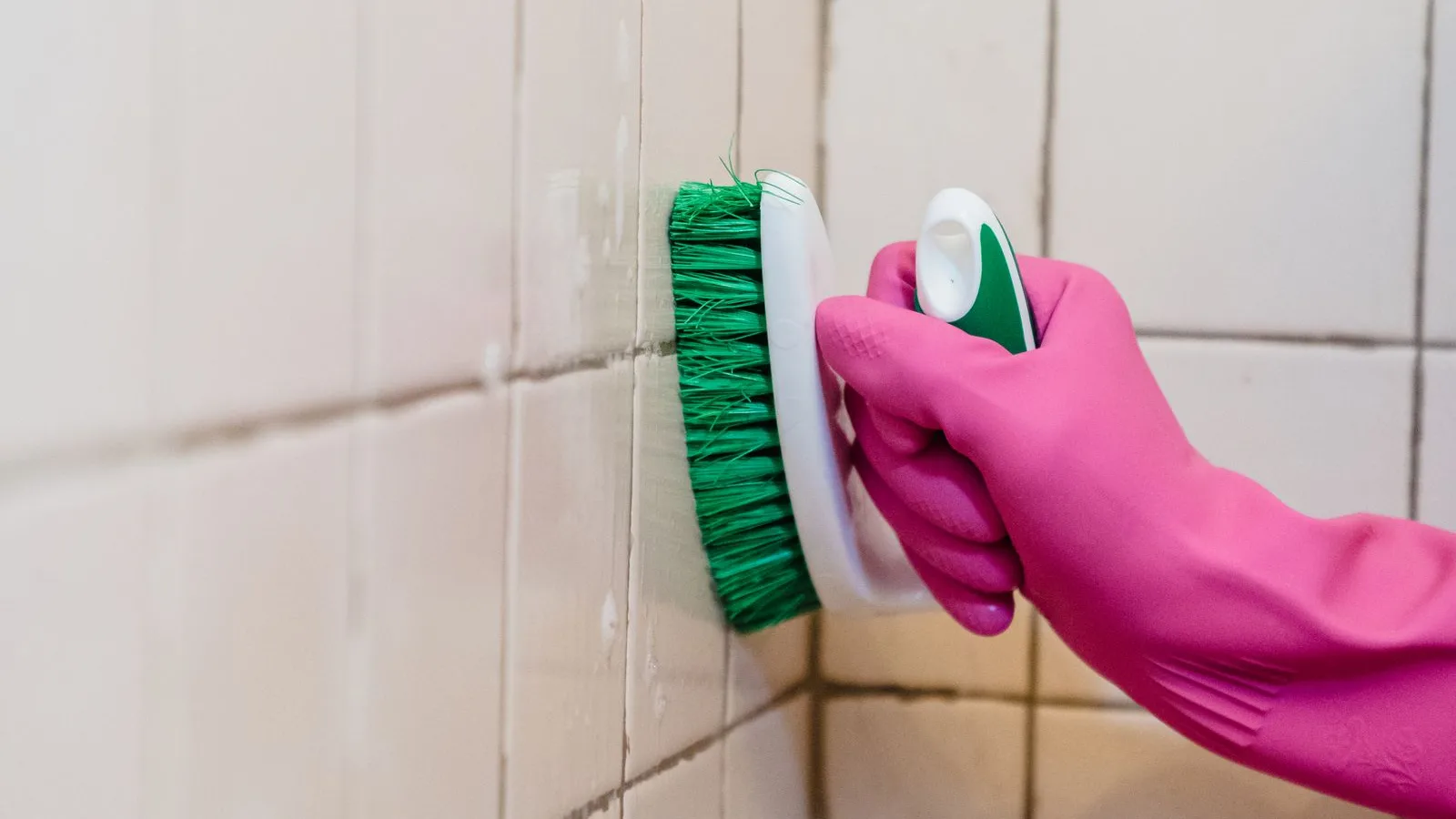
TL;DR: The best grout cleaner for most homes is an oxygen bleach powder (sodium percarbonate, sold as a laundry soaker) mixed with water, left on the lines for 10 to 15 minutes and scrubbed with a stiff brush. A bicarb-and-vinegar paste is the cheap second choice and works on the same light, surface dirt. The test for whether a product can help at all is simple: clean one line properly, with the full dwell time and a brush, and if it dries the same colour it was before, the dirt is inside the pores and no bottle will reach it. Straight bleach and abrasive pads cause more problems than they solve, especially on coloured grout. Grout that fails the one-line test needs agitation and hot-water extraction, which is what a grout clean does that a mop can't.
"What's the best grout cleaner" is one of the more common searches we see, and it's the same question we get asked on tile jobs here in Point Cook and across Melbourne's west. It deserves a straight answer instead of a list of ten products with affiliate links. So here it is: what actually works at home, what to leave alone, and how to tell when you've hit the ceiling of what a bottle can do.
What's the best grout cleaner you can buy in Australia?
An oxygen bleach powder is the best grout cleaner you can buy in Australia for everyday grey and light staining, and a bicarb-and-vinegar paste you mix yourself comes a close second. The oxygen bleach is usually easier to find in the laundry aisle than with the cleaning sprays, it's sold as an oxygen or nappy soaker, and the label lists sodium percarbonate as the active ingredient. Both need the same two things people skip: 10–15 minutes of dwell time, and a stiff brush afterwards.
What no product does is fix grout that has been absorbing dirt for years. That's a limit of the format rather than the brand, a liquid sitting on a saturated, porous surface can only work on what it can reach. So the honest answer to "which product is best" is that the product stops being the variable once the pores are full. From that point the difference is agitation and extraction, not what's in the bottle.
That's worth knowing before you buy a third bottle. On the tile and grout jobs we're called to around Point Cook and Melbourne's west, the owner has usually already tried two or three products and the lines are still grey.
Why grout gets dirty faster than tile
Tile is glazed and mostly non-porous, so dirt sits on top and a mop lifts most of it. Grout is the opposite. It's a cement-based filler, full of microscopic pores, and every one of those pores soaks up water, grease and whatever's tracked across the floor.
Once grime works its way in, a surface wipe only ever gets the top layer. That's why the same lines go dark again within a few weeks of mopping, even in a house that gets cleaned regularly. It's not that the mopping was done badly. It's that mopping was never going to reach what's already inside the grout.
What actually works for light, surface grime
If your grout is a shade or two darker than it should be but not black or crumbling, these are worth trying first:
- Bicarb-and-vinegar paste. Mix bicarbonate of soda with a small amount of water into a paste, spread it along the grout lines, then spray with white vinegar. Let it fizz and sit for 10–15 minutes, then scrub with a stiff (not metal) brush and rinse. This is genuinely effective on everyday soil and food or drink marks.
- Oxygen bleach (sodium percarbonate). Sold as a powder you mix with water. It's gentler than chlorine bleach, works on coloured grout without the same bleaching risk, and does a reasonable job on general greying.
- A steam mop with a grout attachment. Heat and pressure loosen surface grime without chemicals, which is a fair option if you'd rather not use products around kids or pets.
All three need one thing people skip: dwell time. Spraying and immediately wiping barely touches ground-in dirt. Give it the 10–15 minutes, then agitate properly with a brush before you rinse.
What doesn't work, and what makes it worse
A few things people reach for that either don't help or actively cause damage:
- Straight chlorine bleach on coloured grout. It can lighten or blotch the colour unevenly, which usually looks worse than the original stain. On white grout it's less risky, but the fumes in a small bathroom aren't pleasant and it still only cleans the surface.
- Magic erasers and abrasive scouring pads. These are made of compressed melamine foam, essentially very fine sandpaper. Used repeatedly, they wear down the grout surface itself rather than just removing dirt, which leaves it rougher and even more prone to staining.
- Grout pens and grout paint. These cover the grout with a white or coloured coating rather than cleaning it. They can make a floor look fresher for photos or an open home, but they don't remove what's underneath, and the coating chips and wears unevenly with foot traffic. Worth knowing before you use one, particularly if a tenancy or sale is involved.
- Aggressive wire-brush scrubbing. Enough force can widen the grout lines or knock loose grout that was already thin, turning a cleaning job into a repair job. If your grout is crumbling or missing in places rather than just dirty, that's a different problem. Our guide to grout restoration covers what that process actually involves.
When DIY has done all it can
There's a point where the pores are simply saturated with years of build-up, and no amount of scrubbing at home moves it. A few signs you're there:
- The grout looks the same colour after cleaning as it did before, even with proper dwell time and a brush.
- The floor smells slightly musty even right after mopping.
- You're cleaning the same lines every week and they're dark again within days.
That's not a product problem. It's what professional tile and grout cleaning is actually for: hot-water extraction with proper agitation pulls grime out of the pores rather than just moving it around on top. We recently did a home being prepared for sale where the carpets and the tile and grout were cleaned together. Years of build-up that regular mopping had never touched came out, and the grout lines came back close to their original colour. That's the difference extraction makes over a mop and a bottle.
Should you seal your grout?
Sealing is often pitched as the finishing step, but we don't recommend it as standard. A sealer sits on top of the grout, needs stripping before it can be redone, and adds a cost most homes don't need to carry. If you specifically want it done, we'll quote it separately, but it's not something we push as part of a clean.
Mould is a different problem to dirt
If what you're looking at in the bathroom is black rather than grey or brown, that's very likely mould, not soil, and it needs a different approach: ventilation, a mould-specific product and stopping the moisture source, not just scrubbing. We've written a separate guide on how to clean mould from grout if that's what you're dealing with.
Frequently asked questions
What is the best grout cleaner you can buy?
An oxygen bleach powder (sodium percarbonate) is the best grout cleaner you can buy for light, surface-level dirt, and a bicarb-and-vinegar paste is a fair second. Clean one line properly first: if it dries the same colour after the full dwell time and a scrub, the dirt is in the pores and no product will fix it. Grout like that needs agitation and proper extraction, which is where a professional clean earns its keep.
Does bleach ruin grout?
Straight bleach can work on white grout in small doses, but it is harsh, the fumes are unpleasant in a small bathroom, and it does nothing for the grime sitting below the surface. On coloured grout it can lighten or blotch the colour unevenly, which is worse than the stain you started with.
Should I seal my grout after cleaning it?
We do not recommend it as a standard step. Sealer sits on top of the grout and needs stripping before it can be redone properly, which adds cost later. If you want it done, we will quote it as a separate job, but it is not something we push.
Why does my grout go dark again so quickly after I clean it?
Grout is porous, so it keeps absorbing whatever walks across it or drips onto it. Mopping cleans the surface but does not reach what has already soaked in, so the same lines darken again within weeks. That is the gap a proper tile and grout clean is built to close.
If you've tried the DIY route and the grout still looks tired, that's usually the sign it needs proper extraction rather than another product. Request a quote and tell us the floor area, we'll give you a straight, GST-inclusive price before anything's booked.