
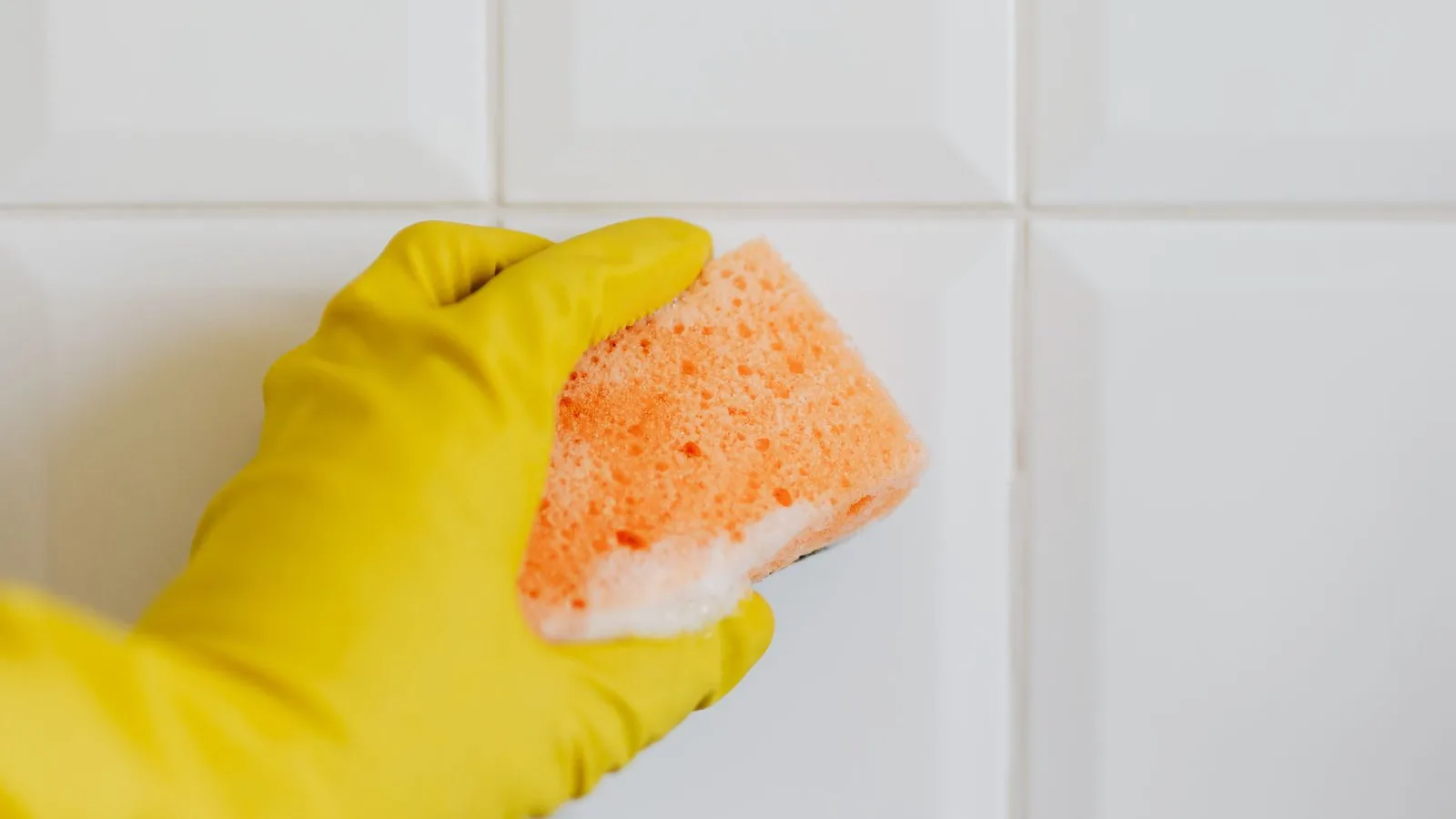
The kitchen is the heart of the home, and unfortunately it's also where grease gets everywhere. Cooking oil turns to a fine mist that settles on tiles, splashbacks and floors, mixing with dust to form that sticky, stubborn film you can feel under your fingertips. Here's how to cut through it properly, and why the grout is the real battle.
Why kitchen grease is so stubborn
Grease is oily, so water alone slides off it, and it builds up in thin layers over weeks and months until tiles look dull and feel tacky. Worse, it works its way into porous grout lines, where a normal wipe can't reach, which is why your grout can look grubby even when the tiles are clean.
Cleaning greasy tiles yourself
For regular maintenance, a few methods work well. Always test a small hidden area first, especially on natural stone.
Warm water and dish soap
Dish soap is designed to cut grease, so it's a great starting point. Mix a few drops into warm water, wipe the tiles with a soft cloth or sponge, then rinse and dry. For light grease this is often all you need.
Bicarb soda paste
For stickier build-up, make a paste of bicarb soda and water, apply it to the greasy area, leave it for 10–15 minutes, then scrub gently and rinse. Bicarb is mildly abrasive and helps lift grease without scratching.
White vinegar for a finish
A diluted white vinegar spray can cut through residue and leave tiles streak-free and shiny. Avoid vinegar on natural stone or marble, as the acid can etch the surface.
Degrease the grout
This is the bit everyone skips. Use a bicarb paste or a dedicated grout brush to work along the grout lines, since that's where grease and grime collect most. An old toothbrush does the job in a pinch.
Why the grout keeps looking dirty
Here's the frustrating truth. You can get the tile faces gleaming, but if the grout has soaked up months of grease and grime, the floor or splashback still looks dirty. Grout is porous, and once grease is embedded in it, surface scrubbing barely touches it.
That's when a professional tile and grout clean earns its keep. High-pressure cleaning flushes grease and discolouration out of the grout lines and off the tile, restoring the whole surface, not just the parts you can wipe. The difference on a greasy kitchen floor genuinely surprises people.
What about sealing the grout?
People often ask about it, so here is my honest position: sealing is not something I push. A sealer fills the porous surface so grease and spills soak in less readily, which sounds like an obvious win, but it sits on top of the grout and has to be stripped before it can be redone properly, which adds cost down the track. I will quote it as a separate job if you want it. I would rather you spent the money on cleaning the grout properly in the first place.
Preventing grease build-up
A few habits keep the grease at bay:
- Wipe down splashbacks after cooking, while the grease is still soft and easy to remove.
- Use a rangehood to capture cooking mist before it settles on surrounding tiles.
- Clean spills and splatters promptly rather than letting them bake on.
- Do a proper degrease monthly rather than waiting for the sticky film to build up.
When to call a professional
If your kitchen tiles have years of grease built up, or the grout is stained and sticky, professional cleaning is the way to go. It saves hours of scrubbing and the result lasts.
We're a family-owned team based in Point Cook, and while we're cleaning your kitchen tiles, plenty of customers also have us freshen up the nearby carpets or couch in the same visit. Call (03) 4328 5637 or get a free quote and let's get your kitchen sparkling.
Frequently Asked Questions
How do you cut through grease on kitchen tiles?
Dish soap is designed to cut grease, so it is a good starting point: mix a few drops into warm water, wipe with a soft cloth or sponge, then rinse and dry. For light grease that is often all you need. Always test a small hidden area first, especially on natural stone.
Why does the grout still look dirty after cleaning the tiles?
Because grout is porous. Tile is glazed and wipes clean, but grout absorbs grease and soil, so a surface wipe only ever lifts the top layer and the lines stay dark.
Should I seal the grout in a kitchen?
Kitchen grout sealing is not something I push. Sealing makes grease soak in less readily, but the sealer sits on top of the grout and has to be stripped before it can be redone properly, which adds cost later. I will quote it as a separate job if you want it.
How do I stop grease building up again?
Wipe splashes while they are fresh rather than letting them cool and harden, and keep on top of the areas around the cooktop where grease lands most.