TL;DR:
- A proper carpet clean has five real steps: inspection, pre-vacuuming, pre-spray and agitation, the steam or dry clean itself, then deodorising and finishing.
- Coffee, wine and general food stains are treated at no extra charge as standard.
- Pet urine is a separate, specially priced job with its own enzyme-based treatment.
- You move what you want cleaned underneath, we clean around the rest.
- Drying time is method-specific: 4 to 6 hours for steam cleaning, 1 to 2 hours for dry cleaning.
Most people booking a carpet clean for the first time picture one thing: a machine gets pushed around the room and the carpet comes out wet, then dry. That picture skips most of what actually happens on the day, and it's why "what's included" is one of the most common questions we get before a booking.
Here's the honest, step-by-step version, plus what's genuinely extra and what to sort out before we knock on the door.
What actually happens during a professional carpet clean?
A standard visit runs through five steps: inspection, pre-vacuuming, pre-spray and agitation, the clean itself (steam or dry), and a finishing stage of stain treatment, deodorising and grooming. Those steps aren't a Green Lion invention. They line up closely with the IICRC S100 standard, the industry reference for how professional carpet cleaning is supposed to be done, which covers everything from soil management to pre- and post-cleaning assessment.
Skip any one of those steps and the result looks similar for a day or two, then falls apart. Traffic lanes reappear because the soil was never lifted, just spread around; a smell shows up a week later because moisture went in without coming back out.
Why does the visit start with an inspection, not the machine?
Because the fibre and the condition of the carpet decide which method gets used, and starting the wrong way can make things worse. Wool and some fluffy synthetic fibres are prone to browning or colour movement with too much moisture, so dry cleaning is often the safer call. Heavy soiling or urine contamination usually needs the extraction power of steam cleaning instead.
The inspection is also when existing damage, worn patches or old staining gets flagged before any work starts, so nobody's arguing afterwards about whether the cleaning caused it.
The step before any liquid touches the carpet
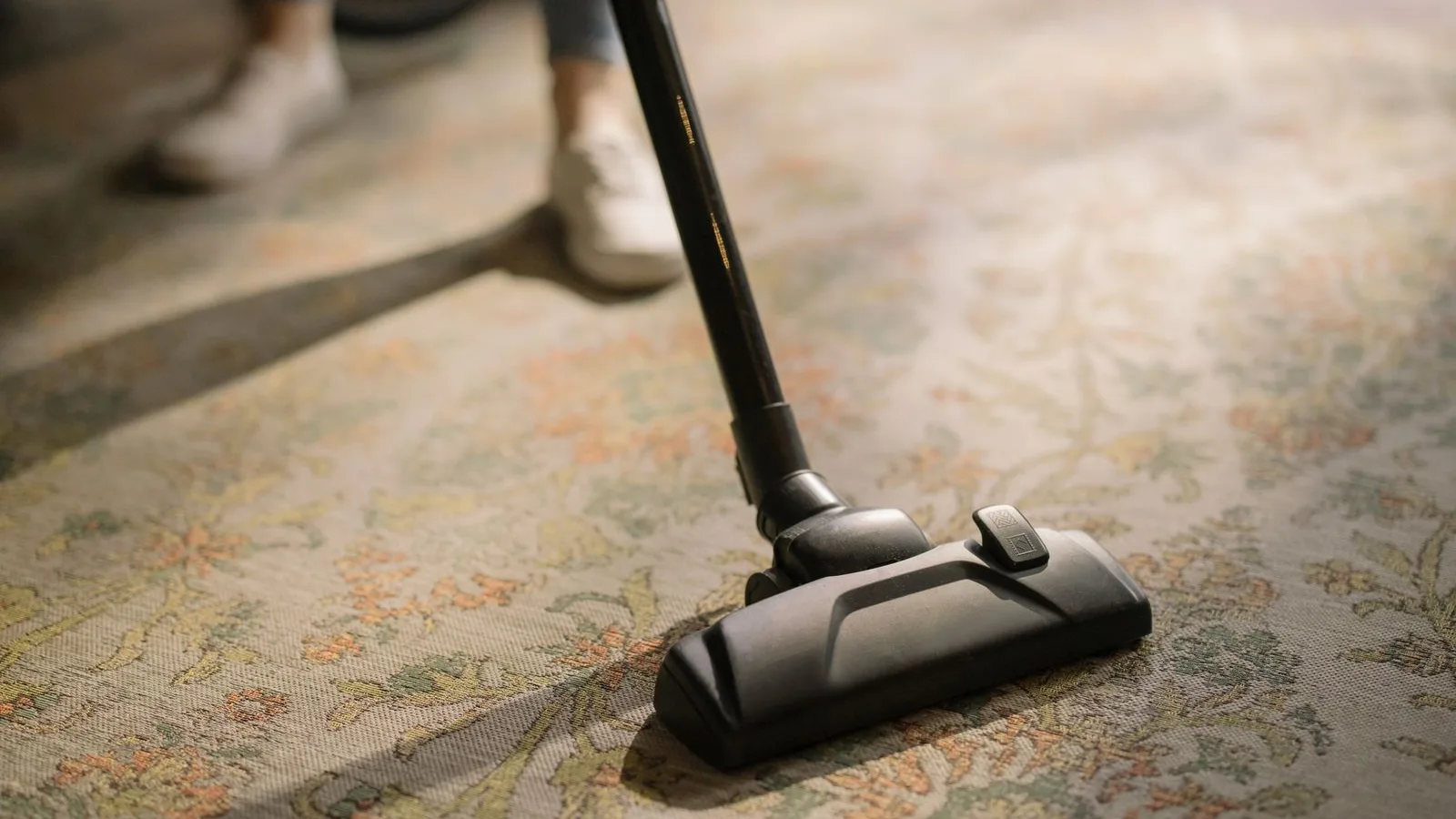
Pre-vacuuming looks like the least important part of the job, and it's actually one of the most important. Carpet works like a filter: it holds dry soil, grit and dust down in the fibres rather than letting it circulate through the air, which is a genuine advantage for indoor air quality according to the Carpet and Rug Institute's Filtration Soiling bulletin.
The catch is that all of that trapped soil has to come out dry, before any solution goes in. Spray water onto a carpet that hasn't been vacuumed and you're not cleaning the dirt, you're turning it into mud and pushing it deeper into the pile. That's a shortcut some rushed jobs skip, and it's the single biggest reason a "clean" carpet still looks dull a week later.
Which stains are treated at no extra charge?
Ordinary food and drink stains, including coffee, wine and general spills, are treated as part of a standard clean at no extra cost. It is simply what a proper clean includes.
In my experience, the gap between a rushed job and a proper one usually shows up right here. One job that comes to mind: a customer had already paid another company to clean before moving in, but crumbs, old stains and gum marks were still there. The fix was doing the basics properly: a thorough vacuum first, enough dwell time for the pre-treatment to actually work, and the right product for the gum instead of scrubbing at it. The customer was happy enough to tip on the spot. Nothing about that job was exotic. It was just done in the right order, with enough time given to each step.
Is pet urine treatment part of the standard price?
No, and any honest cleaner will tell you the same. Pet urine needs a separate treatment: locating the affected areas (often with a blue light), a pet-safe enzyme product that targets the bacteria causing the smell rather than just masking it, and extra dwell time before extraction. That's real, additional work, so it's priced separately per affected room rather than folded into a standard clean. Our pet odour removal service covers this in detail, including what it can and can't reach once contamination has gone below the surface fibres.
Steam or dry: how the method gets chosen for your carpet
Both are legitimate professional methods, chosen for the job rather than a one-size-fits-all default. Steam cleaning is hot-water extraction: solution is worked into the fibres, then extracted along with the loosened soil. It's usually the pick for heavier soiling or deeper contamination. Dry carpet cleaning uses a low-moisture process with a machine that agitates and cleans at the same time, which suits wool or fluffy fibres, embedded pet hair, and situations where a fast turnaround matters, like an office.
Neither method costs more than the other. The choice comes down to what actually suits your carpet, not which one is easier for us on the day.
Do you move the furniture?
Move anything you want cleaned underneath before the appointment. We clean around furniture left in place, and can help shift a few small items, but heavy, bulky or fragile pieces stay put. The reason is simple. We don't want to be the ones who scratch or drop your bed frame or bookshelf.
If a room needs to be fully clear, plan for that the day before rather than the morning of.
How long until I can walk on the carpet again?
That depends entirely on the method. Steam-cleaned carpet is normally dry in 4 to 6 hours. Dry carpet cleaning, being low-moisture rather than water-free, is usually walkable in 1 to 2 hours. Neither number is a guess: they're method-specific, and it's worth being wary of any cleaner who quotes one drying time regardless of which process they're using.
What if the result isn't right?
You've got a seven-day satisfaction guarantee. If something about the clean is bothering you, call within that window and we'll come back and re-clean it, free. It's a straightforward remedy: a free re-clean, not a refund, and not a promise that every mark will vanish, but a real safety net if the result isn't what you expected.
What's not included in a standard carpet clean?
A few things worth knowing before you book, so nothing's a surprise on the day:
- Moving heavy or fragile furniture as standard. You move what you want cleaned under.
- Pet urine treatment. It's a separate, specially priced step, not part of the base clean.
- A guarantee that every stain disappears. Fresh food and drink marks respond well. Old dye loss, ink, rust or long-set staining might improve but isn't guaranteed to lift completely, and we'll tell you honestly if we think a mark is permanent before we start.
- Repair of wear, fibre damage or worn patches. Cleaning improves how a carpet looks, it doesn't rebuild it.
None of this is unusual. It's what Consumer Affairs Victoria recommends checking with any tradesperson: get clear on what a quote covers before the work starts, not after.
There's also a real reason to keep on top of cleaning beyond appearance. Carpet fibres trap house dust mite allergens, which the Better Health Channel links to asthma and eczema flare-ups in sensitive people, and research on childhood exposure has found that higher allergen levels in the home measurably raise asthma risk later in childhood. A clean that includes proper extraction, not just surface vacuuming, does more than make the carpet look better.
Getting a clean that suits your carpet
Every visit starts the same way regardless of what you're booking: an inspection, a scope confirmed with you, then the method chosen to suit the fibre and the soiling, not the other way around. The Carpet and Rug Institute recommends professional cleaning every 12 to 18 months to keep carpet performing well, and most homes with pets or kids do better going more often than that.
We don't publish a fixed price list on this site because the honest answer to "how much" depends on your rooms. Read how pricing works for the full breakdown, or get an exact number through the chat on this page in about a minute.
Frequently Asked Questions
What's included in a standard carpet clean?
An inspection, pre-vacuuming, pre-spray and agitation of traffic lanes and stains, the steam or dry cleaning itself, treatment of common food and drink stains, and general sanitising and deodorising. You get a finished, groomed carpet at the end, not just a damp one.
Do I need to move my furniture before you arrive?
Move anything you want cleaned underneath before we get there. We clean around furniture that's still in place and can shift a few small items, but heavy or fragile pieces stay where they are, mainly to avoid damaging them or your floor.
Are stains like coffee and wine included, or extra?
Common food and drink stains, including ordinary coffee and wine, are treated at no extra charge as part of a standard clean. Pet urine is the one exception, because it needs a separate enzyme-based treatment and is priced per affected room.
How long will my carpet take to dry?
Carpet drying time depends on the method. Steam cleaning (hot-water extraction) normally dries in 4 to 6 hours. Dry carpet cleaning is a low-moisture process and is usually walkable again in 1 to 2 hours.
What happens if I'm not happy with the result?
You've got seven days. If something's bothering you about the clean, call us within that window and we'll come back and re-clean it at no charge.