
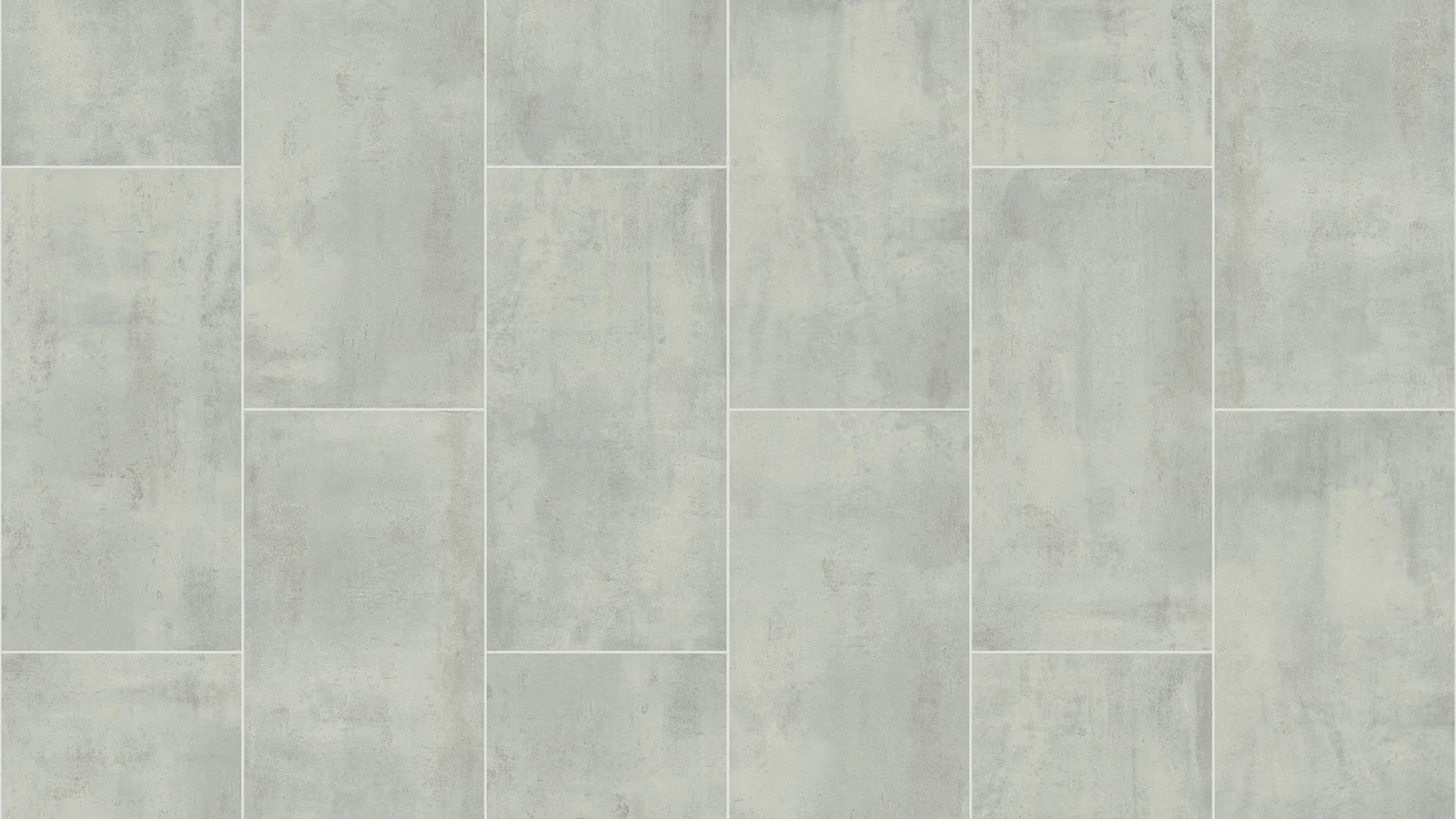
TL;DR:
- Porcelain tiles barely absorb water, so most dirt sits on top. What usually dulls the floor is a film left by the wrong cleaner.
- Sweep first, mop with a pH-neutral cleaner, rinse with clean water and wipe dry.
- Skip household soap, wax and polish products and no-rinse cleaners. They leave a layer that dulls the floor and can make it more slippery.
- Polished, matt and anti-slip finishes need slightly different care. Your tile maker's guide is the final word.
- When the grout lines stay dark after a proper mop, the tiles are rarely the problem. That is the point to get the grout deep cleaned.
The way to clean porcelain tiles is simple: remove the grit, wash with a pH-neutral cleaner, then rinse and dry so nothing is left behind. Most porcelain floors that look tired are coated in leftover product, and every mop with the wrong cleaner adds another layer.
That is good news, because a film can be removed. Here is how to tell what you're dealing with and how to keep it from coming back.
What makes porcelain tiles different from other tiles?
Porcelain tiles are dense enough that they hold almost no water, so stains and dirt mostly stay on the surface instead of soaking in. Under the American tile standard, a tile only counts as porcelain if it has a water absorption of 0.5% or less.
Italian maker Marca Corona describes porcelain as an inert surface that doesn't absorb liquids, stains or dirt. In practice that means two things for you:
- Gentle cleaning works on the tile itself. You rarely need anything strong.
- The grout between the tiles is a different material. It is cement based and porous, and that is where grime actually builds up.
So when a porcelain floor looks grubby, check whether it is the tile face, a film on top of it, or the grout lines. Each one needs a different fix.
Work out which finish you have
Porcelain comes in a few finishes, and they don't all want the same cleaner. Atlas Plan, a porcelain maker, recommends an acid floor cleaner for matt finishes but a neutral or alkaline, non-abrasive cleaner for polished and gloss tiles. Other makers are more cautious with acid, which is why your own tile's care guide matters.
| Finish | What it looks like | What to watch for |
|---|---|---|
| Polished | Shiny, reflective, often marble look | Shows streaks and film easily, scratches from abrasives |
| Matt | Flat, low sheen | Film makes it look patchy and dull |
| Textured or anti-slip | Grippy to the touch, common outside and in bathrooms | Dirt sits in the texture and needs brushing |
Anti-slip tiles in Australia are rated with a pendulum test from P0 to P5. Beaumont Tiles explains that P0 to P3 is generally used indoors, while P4 and P5 suit outdoor areas and pool surrounds. The higher the rating, the more texture you are usually cleaning.
If you don't know what was laid, look for the box label, ask your builder or check the tile supplier's website.
How do you clean porcelain floor tiles week to week?
Sweep or vacuum, mop with warm water and a pH-neutral cleaner, then rinse and dry the floor. That routine suits almost every porcelain floor.
- Remove the grit first. Australian supplier Vedere calls daily sweeping or vacuuming very important, so loose soil, sand and mud are gone before the mop goes down.
- Mop with a neutral cleaner. A microfibre mop and a pH-neutral product do the job. Daltile warns against mopping with dirty water, since it just spreads the dirt across the whole floor.
- Rinse with clean water. This step is the one people skip, and it is the one that stops film forming.
- Wipe or squeegee dry. Porcelain maker Happy Floors recommends a rinse and a wipe dry whenever a detergent is used.
For spills, wipe them up while they are fresh. Sanmarco, an Australian tile supplier, suggests warm water with a mild detergent for food, coffee and drink marks, followed by a thorough rinse.
Why do porcelain tiles look cloudy or streaky after mopping?
Cloudy or streaky porcelain is almost always caused by something left on the surface: soap, wax or polish, no-rinse cleaner, or on a newer floor, grout haze from installation. The tile underneath is usually fine.
Vedere says household soaps tend to leave a slippery scum and that cleaners with wax or polish build up over time. Daltile goes further. It does not recommend cleaners that skip rinsing, because the residue can reduce slip resistance.
Johnson Tiles makes the same point about anti-slip ratings: cleaning residues and build-ups can reduce friction. A floor that was rated safe when it was laid can become slipperier simply from what has been mopped onto it.
In my experience, residue is one of the most common cleaning failures on any surface. Too much detergent leaves a sticky layer that grabs new dirt, so the floor looks worse sooner and people respond by using more product. Using less and rinsing properly breaks that cycle.
Grout haze on a new floor
If the cloudiness appeared soon after the tiles went down, it is likely grout or cement residue. Vedere notes this film is generally insoluble in water, so normal mopping won't touch it. Sanmarco warns that haze left on the tile can trap dirt and leave a permanent cloudy look.
The fix is a cement residue remover made for porcelain, used exactly as its label says and rinsed off well. If you are unsure, ask your tiler. Marca Corona says the first clean after installation is the step people most often underestimate.
Cleaning textured and anti-slip porcelain
Day to day, textured tiles take about the same care as smooth ones. They need a little more effort once they do get dirty. Beaumont Tiles says textured surfaces can catch a bit more dirt, and that the initial clean after laying matters most for them.
When a profiled surface is grubby, Vedere advises giving the cleaner enough dwell time and then agitating with suitable pads or brushes before removing it. A mop alone tends to glide over the top of the texture and leave the dirt in the low points. Marca Corona suggests a stiff-bristle brush for outdoor tiles with a grip finish.
Rinse well afterwards. On an anti-slip floor, leftover cleaner is the last thing you want sitting in the texture.
What should you never use on porcelain tiles?
Avoid harsh acids and alkalis, anything with hydrofluoric acid or fluorine compounds, abrasive pads on polished tiles, and wax, polish or oil-based soaps. Atlas Plan says hydrochloric acid, caustic soda and hydrofluoric acid should not be used under any circumstances.
A few more rules from the makers:
- Fluorine compounds. Daltile says they damage ceramic, glass and stone.
- Bleach on the joints. Marca Corona advises strongly against bleach, which it calls unnecessarily aggressive and which can damage the grout.
- Mixing products. Vedere warns that bleach and ammonia together create a toxic gas. Never mix cleaners unless the label tells you to.
- Metal scourers and harsh pads. Sanmarco lists these alongside oily and wax-based products as things to avoid.
- Letting cleaner dry on the tile. Sanmarco warns against this too. Rinse it off while it is still wet.
Before you use anything new, test it on a spare tile or a hidden corner first. Daltile recommends a small test patch for any chemical before a larger area.
When is it time to call a professional?
Call a professional when the tiles look clean but the grout lines stay dark, or when years of product build-up won't come off with a normal mop. At that point the problem sits in the porous grout or in old coatings, and that needs a different approach.
One job that comes to mind was a home being prepared for sale. We cleaned the carpets and the tiled floors together, and the grime that had built up in the grout lines came out, so the whole floor presented much better.
Our tile cleaning applies a tile-and-grout solution, agitates where heavier grime needs it, then uses spinner cleaning or hot-water extraction before a final mop. Floors are normally usable shortly afterwards. A few honest limits:
- Old wax or failed sealer can trap dark soil underneath. It needs paid stripping first and is quoted separately.
- We don't repair missing grout, so gaps limit the result.
- Grout sealing isn't part of the clean. We don't recommend it, but we can do it as a paid extra if you ask.
- Shower walls and other wall tiles are cleaned only by request.
Pricing is by floor area with a minimum per visit, and the scope is confirmed before we start. Our guide to tile cleaning costs explains how that works. If your floor is mixed tile types, the general guide to tile floors covers ceramic and natural stone too, and black spots in bathroom grout are covered in our post on grout mould.
Frequently asked questions
Can you use vinegar on porcelain tiles?
Tile makers disagree. Atlas Plan suggests an acid cleaner for matt porcelain, Vedere says acidic cleaning agents are not recommended, and Daltile cautions against acid on polished porcelain. Check your tile maker's care guide and stick to a pH-neutral cleaner for routine mopping.
Why do my porcelain tiles look cloudy after mopping?
Usually a film. Household soap, wax or polish products and no-rinse cleaners can all leave a layer that dulls the surface and catches dirt. On a new floor, the haze is often grout or cement residue left from installation, which plain water will not shift.
Can you use a steam mop on porcelain tiles?
Vedere lists a steam mop as fine for routine cleaning of porcelain. It will not lift grime that is set deep in the grout lines, so think of it as a quicker mop. It is not a deep clean.
Is matt porcelain harder to clean than polished?
Not for the tile itself. Italian maker Marca Corona calls that a common mistake, because porcelain does not absorb dirt whatever its finish. Deeply textured and anti-slip tiles may need a stiffer brush to reach into the surface.
How often should porcelain floor tiles be mopped?
Marca Corona suggests every day or every other day in busy areas like the kitchen, and once or twice a week in other rooms. Sweep or vacuum first so you are not pushing grit around with the mop.