
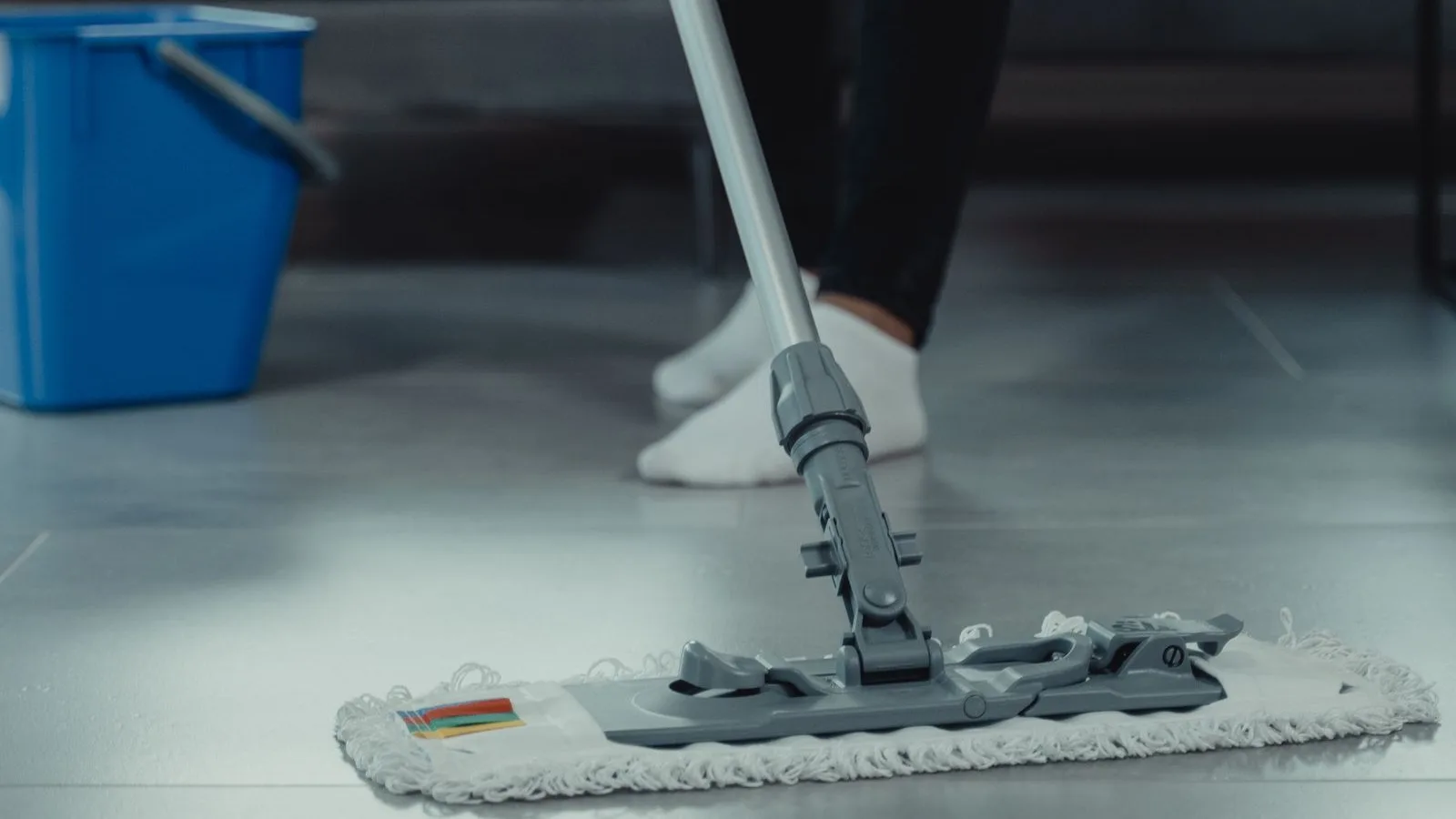
TL;DR:
- Sweep or vacuum before every mop. Grit left on the floor scratches the glaze and turns mop water into mud.
- Use warm water and a pH-neutral cleaner, at the dose on the label. More product does not mean a cleaner floor.
- Rinse with plain water. A dull or sticky floor is usually leftover cleaner.
- Keep vinegar, lemon and other acids off marble, limestone and travertine.
- If the grout stays dark after a proper mop, the dirt is inside it, and no mop will reach it.
Learning how to clean tile floors properly is mostly about doing less. Less product, and fewer miracle mixes from the internet. Tile is one of the toughest floors you can own, but the way it is cleaned decides whether it looks crisp or tired.
I clean tiled floors across Melbourne's west alongside carpets, and one belief about mopping comes up more than any other. This guide covers the routine, the mistakes that make a floor look worse, and the point where a mop stops being enough.
What is the right way to clean tile floors?
The right way to clean tile floors is to remove loose grit first, mop with a pH-neutral cleaner in clean warm water, then rinse and dry. That routine suits almost any tiled floor in a house.
Tile maker Daltile puts it simply: sweep or vacuum first and never mop with dirty water, because it just spreads the dirt across the whole floor. Interceramic recommends neutral cleaners with a pH of 7, the same as water, as the gentlest option for both tile and grout.
That is the whole method. Everything else in this guide is detail on doing it well.
Start by working out what your tile is
Before you buy a single product, know what is on your floor. The type of tile changes what is safe.
| Tile type | How to spot it | What to watch |
|---|---|---|
| Glazed ceramic | Shiny or satin face, different colour on the edge | Tough surface, but the glaze can scratch |
| Porcelain | Dense and heavy, colour often runs right through | Very hard wearing, polished finishes show film easily |
| Natural stone | Veins, pits, uneven colour (marble, limestone, travertine, slate) | Acids can etch it |
| Unglazed or textured tile | Matt, slightly rough, often outdoors or in wet areas | Holds dirt in the texture |
If you have no idea what was laid, check your builder's paperwork or ask the tile shop that supplied it. Treat an unknown stone-look floor as real stone until you know otherwise.
How do you clean tile floors week to week?
Sweep or vacuum every day or two in busy areas, then mop once a week with a properly diluted cleaner and a clean microfibre mop. Kitchens and entries need more attention than bedrooms.
Here is the routine I would give any household:
- Clear the floor and sweep or vacuum, including corners and along the skirting.
- Fill one bucket with warm water and a pH-neutral cleaner at the label dose.
- Mop in sections, starting at the far side of the room and working towards the door.
- Rinse the mop often. Change the water as soon as it looks grey.
- Go over the floor again with plain clean water.
- Wipe up any puddles so water does not sit in the grout lines.
Perth tile supplier Myaree Ceramics suggests a microfibre mop with methylated spirits and hot water for a more thorough clean, and a soft broom for everyday sweeping. That is a good option when the floor feels greasy and plain water is not cutting it.
Why do clean tiles still look dull or feel sticky?
Dull or sticky tiles are almost always caused by leftover cleaner, not leftover dirt. Too much product or no rinse leaves a thin film that catches new dirt and makes the floor look tired.
Daltile advises against no-rinse cleaners because the residue can reduce slip resistance, and it warns that bleaches and alkaline cleaners can need several rinses to fully remove. Porcelain maker Happy Floors says the same thing from the other side: if you use a detergent, rinse with clean water and wipe dry to stop a film forming.
That film is not only a looks problem. SafeWork NSW lists smooth ceramic tiles as slippery when wet and includes excessive detergent residue on its hazard checklist for floors. In a home with kids or older parents, that matters.
The fix is easy. Mop the whole floor once or twice with plain warm water, wring the mop hard, and dry it off with a towel. Then halve the amount of cleaner you were using.
What should you never put on a tile floor?
Never put acids on natural stone, never mix bleach with other cleaners, and avoid gritty powders and oily soaps on any tile. Each one does damage you cannot mop away.
- Acids on stone: The Natural Stone Institute warns that lemon, vinegar and other acids can dull or etch stones such as marble and limestone. American Olean explains that this is an etching, not a stain, so it cannot be cleaned off.
- Rust removers and toilet cleaners: The same Natural Stone Institute page notes that many contain traces of hydrofluoric acid, which attacks every stone, granite included.
- Mixed chemicals: Washington State's health department says bleach mixed with ammonia releases toxic chloramine gases, and mixing it with acids is dangerous too. Use one product at a time.
- Gritty cleansers and soap-based products: Myaree Ceramics says soap-based products leave a thin film that makes tiles dangerous to walk on and attracts more dirt.
Occasional vinegar in a weak mix is fine on glazed ceramic and porcelain. It is the stone floors where it does real harm.
Is a steam mop good for tile floors?
A steam mop is fine for routine cleaning on sealed ceramic and porcelain, but it will not shift dirt that is set deep in the grout. Treat it as a quicker mop, not a deep clean.
CHOICE tested steam mops on cola and tea stains in grout, and they all did a poor job. Their explanation is plain: the pads cannot reach into recessed grout, and steam is just hot water. CHOICE also says sealed ceramic and stone tiles are fine with steam, but suggests checking your particular tile first.
So if your tiles look good and you like the convenience, a steam mop is a reasonable tool. If the grout is the problem, it is the wrong one.
Deep cleaning a tile floor yourself
When the routine has slipped for a while, a one-off deep clean at home can bring most of the tile surface back. Grout is where it usually stalls.
Work in small sections. Apply your diluted cleaner, give it a few minutes to work, then scrub with a soft nylon brush in circles before rinsing. Keep the floor wet while you scrub, so you are not grinding dry grit into the glaze. Rinse twice and dry.
For the grout lines themselves, a stiff brush and some patience go further than any spray. We go through what actually works, and what makes grout worse, in our guide to grout cleaners. If the dark marks are fuzzy, black and spreading in a bathroom, that is mould, which has its own mould method.
One thing to check before you scrub hard: old wax or a worn-out coating. Some older floors were coated years ago, and dark soil gets trapped underneath. No amount of mopping reaches it, because the dirt sits under the coating, not on it. That layer has to be stripped first, and stripping is extra work that gets quoted on its own.
When is it time to call a professional?
Call a professional when the tile is clean after a proper mop but the grout lines stay dark. That dirt is down inside the grout, and household mops and steam pads do not reach it.
The most common belief I hear is that regular mopping keeps tile and grout clean for good. It doesn't. Grout is porous, so a little dirt goes in with every mop and stays there. Over a few years the lines go from cream to grey to brown, even in a house that is mopped every week.
One job that comes to mind was a home being prepared for sale. We cleaned the carpets and the tiles and grout, and the grime that had built up in the grout lines lifted out, which made a real difference to how the whole floor presented. Mopping had not reached it.
Our tile cleaning uses a cleaning solution, agitation where the grime is heavy, then spinner cleaning or hot-water extraction to pull the dirt out of the grout before a final mop. It doesn't fix everything. Missing grout can limit the result, because we don't do grout repair, and some old staining is permanent. Tile is priced by floor area with a minimum per visit, and we explain how pricing works in a separate guide.
Frequently asked questions
What is the best thing to clean tile floors with?
Warm water and a pH-neutral cleaner suit almost every tile floor. Sweep or vacuum first, use a clean mop, and rinse with fresh water so no film is left behind.
Can I use vinegar on tile floors?
A weak vinegar mix is fine on glazed ceramic and porcelain. Never use it on marble, limestone or travertine, because the acid etches the surface and the mark cannot be cleaned off.
Why do my tiles look dull after I mop?
Usually it is leftover cleaner, not dirt. Too much product, no rinse, or a dirty mop leaves a film that dulls the tile and catches new dirt. Mop again with plain warm water.
Is a steam mop safe on tile floors?
On sealed ceramic and porcelain, generally yes. It will not shift dirt that is set deep in the grout lines, and it is worth checking what the tile maker recommends first.
How often should tile floors be mopped?
Sweep or vacuum high-traffic tiles every day or two and mop weekly. Kitchens and entries usually need it more often than bedrooms or a formal lounge.